Advertising for shops and e-commerce: flyers, posters and graphics — ideas and examples
A high-street or neighbourhood shop gets the best results from an A2 or A1 poster in the window, an A5 or DL flyer through local letterboxes and a clear shop sign. An online shop does best with 1080×1080 px and 1080×1920 px social graphics plus a parcel insert (DL or A6 on 300–350 g/m² card) carrying a discount code. Prepare print files in CMYK at 300 DPI, with 3 mm bleed and a 3–5 mm safe area inside the trim line, and print flyers on 130–170 g/m² coated paper. Text on a flyer should be no smaller than 8–9 pt, and a QR code no smaller than 2×2 cm.
Example designs for this industry


A corner shop competes for the customer walking past. An online shop competes for the customer who will come back for another order. A specialist shop competes for the customer looking for expert advice. Each of them needs a different mix of print and graphics. Below you'll find the materials that genuinely work in retail, 10 ideas you can put into practice straight away, ready-made slogans, colour choices, a calendar of retail occasions and the mistakes that make advertising go to waste.
Which advertising materials matter most for a shop?
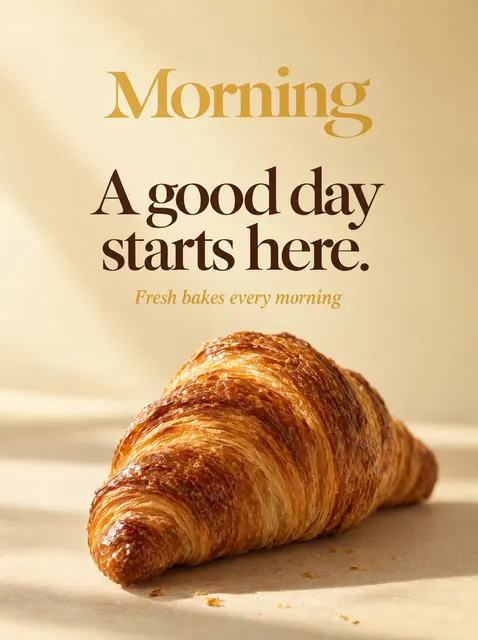
For a bricks-and-mortar shop, the window and shopfront matter most, because they are what stops a passer-by. A poster with one specific offer, a legible shop sign and a flyer through nearby letterboxes drive footfall within a radius of a few hundred metres. For a neighbourhood shop, that reach is all you need.
In e-commerce, the parcel is your only physical contact with the customer. A parcel insert with a discount code, a thank-you card and a sticker sealing the box cost very little, yet they reach someone who has already bought from you once. Add to that social media graphics and website banners, which work for you every single day.
| Material | Typical format | Where it works | Best suited to |
|---|---|---|---|
| Poster | A2, A1 (A3 for the door) | window, door, noticeboard | neighbourhood shop, specialist shop |
| Flyer | A5, DL, A6 | letterboxes, counter, parcel | every shop |
| Voucher / gift card | DL, 210×100 mm, A6 | parcel, till, gift | e-commerce, specialist shop |
| Sticker | any size and shape | window, packaging, box | e-commerce, bricks-and-mortar |
| Shop sign / board | 60, 100, 120 cm wide | shopfront, entrance | bricks-and-mortar shop |
| Fence banner | 200×100, 300×100, 500×100 cm | fencing, shop opening | new shop, residential area |
| Roll-up banner | 85×200, 100×200 cm | in-store, trade fairs, shopping centre | specialist shop |
| Online graphics | 1080×1080, 1080×1920, 2400×1200 px | Facebook, Instagram, website | e-commerce |
| Label / swing tag | any, 50×90, 60×120 mm | product, shelf | own-brand products |
10 advertising ideas for shops and e-commerce
You don't have to do everything at once. Pick 2–3 ideas that suit your type of shop and stick with them consistently for a few months.
- A ‘deal of the week’ poster in the window — hang an A2 snap frame and swap the poster every week for one featuring a single product and its price. One template is enough; you only change the photo and the price.
- A flyer for local letterboxes — A5 or DL with opening hours, a small map and a cut-out coupon. For a neighbourhood shop, a letterbox drop within a few hundred metres is the main source of new customers.
- A parcel insert with a code for the next order — DL or A6 on 300–350 g/m² card, with a code valid for a set period. Using a separate code just for the insert lets you see exactly how many orders it brought in.
- A thank-you card — A6 in the style of a handwritten note, asking for a review, with a QR code linking to the review form. It builds a relationship and gathers the reviews that online sales depend on.
- A parcel seal sticker — round, 50–70 mm, with your logo and shop address. A window version showing opening hours works well by the entrance.
- A gift voucher — a DL voucher with a serial number and a space for the amount, issued at the till and available in your online shop. It sells best in the run-up to Christmas and Mother's Day.
- A fence banner for an opening or a change of range — 300×100 cm with no more than 5–7 words and a large logo. It's read from a passing car, so only the slogan and the direction count.
- A loyalty card — an 85×55 mm business card with spaces for stamps, e.g. a discount on every tenth purchase. A cheap way to stop local customers drifting off to the discount supermarket.
- A consistent series of posts and Stories — the same design, colours and slogan as the poster in your window. A customer who sees the offer on their phone and then on the glass will remember it more quickly.
- ‘Staff pick’ shelf labels — small cards with 2–3 sentences of opinion about the product. In a specialist shop they show expertise and make choosing easier without having to ask staff.
What to write on a shop flyer or poster: sample slogans
Good shop advertising has five elements: a headline with a benefit, a specific offer, an expiry date, a call to action and the details customers need to find you. On a poster, keep only the headline, the offer and the address, because a passer-by looks at it for just a few seconds. On a flyer, you can add a map, opening hours and a QR code.
Instead of ‘wide range, competitive prices’, write things the customer can check: opening times, a price, free delivery over a set amount, distance. Specifics sell; vague claims get ignored.
- Neighbourhood shop: ‘Fresh bread from 6am — right on your doorstep’
- Neighbourhood shop: ‘Open 7 days a week, 6am–10pm’
- Neighbourhood shop: ‘Bring this flyer — free coffee with your shopping’
- Online shop: ‘15% off your first order with code WELCOME15’
- Online shop: ‘Scan and get €3 off your next order’
- Online shop, parcel insert: ‘Thank you for choosing us. Your review will help others’
- Specialist shop: ‘We advise, we fit, we swap — your local bike shop on the High Street’
- Specialist shop: ‘Come in with a problem, leave with a solution’
- Voucher: ‘Give the gift of choice — vouchers worth €10, €25 or €50’
Which colours and style suit shop advertising?
Start with your brand colours, repeated on your shop sign, posters, parcels and social media. Red and yellow are excellent for signalling a promotion, but use them as an accent on the price or a discount sticker rather than across the whole design. Make sure there's enough contrast: dark text on a light background or vice versa, and no text over photos with a busy pattern.
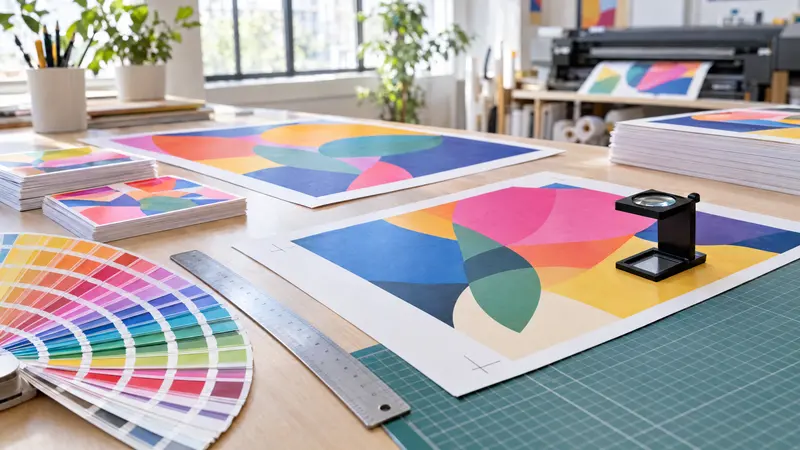
Remember that screens display colour in RGB, whereas print is produced in CMYK. Bright neons, intense turquoise and some purples will come out darker when printed, so set up any design intended for print in CMYK from the very start.
| Type of shop | Colours | Style |
|---|---|---|
| Grocery, neighbourhood shop | green, yellow, red for prices | simple, large prices, product photos |
| Online: fashion, beauty | pastels, black and white, brand colour | minimalist, plenty of white space |
| Electronics, hardware shop | navy, graphite, turquoise accent | clean grid, icons, short specs |
| Specialist: angling, cycling, garden | natural colours, orange as an accent | photos of the product in use, expert tone |
| Eco shop, delicatessen | kraft, bottle green, gold | natural paper, serif fonts |
Calendar of retail occasions through the year
Prepare materials for each occasion 3–4 weeks in advance: that's usually how long design, printing, delivery and flyer distribution take. Add your own occasions to the calendar, such as the shop's anniversary, the peak season in your trade or a local fair.
| Period | Occasions | What to prepare |
|---|---|---|
| January | post-Christmas sales, New Year | ‘sale’ poster, posts with discounts |
| February | Valentine's Day, half-term | gift voucher, gift sets |
| March–April | International Women's Day, Mother's Day, Easter (date varies), spring | seasonal poster, Easter promotional leaflet |
| May | bank holidays, First Communions | vouchers, flyer with gift ideas |
| June | Father's Day, start of the summer holidays | countdown Stories, promotional poster |
| July–August | summer sales, school uniform and supplies | website banner, ‘back to school’ flyer |
| September–October | back to school, Halloween, autumn season | themed poster, parcel stickers |
| November | Black Friday, Cyber Monday, start of Christmas shopping | 2400×1200 px banners, discount codes |
| December | Christmas, Boxing Day sales | vouchers, Christmas cards for parcels, poster with opening hours |
How to prepare files for print and online
Save your print file as a PDF at the finished (trim) size plus 3 mm bleed on every side. Keep all text, logos and QR codes at least 3–5 mm inside the trim line. Photos must be 300 DPI at 1:1 scale; an image downloaded from a website usually has too low a resolution.
Banners and roll-ups are viewed from a distance, so large-format printers accept files at 1:10 scale, and a resolution of around 100–150 DPI at full size is usually sufficient. Prepare online graphics in RGB; in Stories, leave roughly 250 px clear at the top and bottom, because that's where the app places its buttons.
- Flyer: 130–170 g/m² coated paper, body text at least 8–9 pt
- Parcel insert, voucher, card: 300–350 g/m² card
- Business card and loyalty card: 350 g/m², uncoated or matt stock if there are stamp spaces
- Window poster: 150–200 g/m² paper, with the headline on A2 and A1 several centimetres high so it can be read from the pavement
- Sticker for the inside of a window: printed film designed to be read through the glass (reverse or mirror-image print)
- QR code: at least 2×2 cm, dark on a light background, tested with a phone before printing
Common mistakes in shop advertising
Most flyers and posters that fail don't have poor graphics; they have poor content or are missing the information a customer needs to act. Check your design against the pitfalls below.
- Too many products on one poster — in a shop window, a single offer with a big price wins.
- No address, opening hours or website, because ‘everyone knows anyway’.
- A promotion with no end date — the customer puts off the decision and then forgets.
- A discount code you can't track because it's the same across every channel.
- A faded poster left in the sun for months — a sign that the shop doesn't look after itself.
- A design in RGB and low-resolution photos taken from the website, making the print dark and blurry.
- Text right up against the edge, cut off when trimmed, and no 3 mm bleed.
- Different colours and logos on the shop sign, in the parcel and on Instagram — customers don't connect them as one brand.
Checklist
- Proofread all text, the phone number, address and website
- Check the promotion's end date and the discount code terms
- Set 3 mm bleed and a 3–5 mm safe area
- Make sure the print file is in CMYK and the photos are 300 DPI
- Scan the QR code with a phone and check where it leads
- Check that colours and logo match your shop sign and online graphics
- Choose a paper weight to suit the use (flyer, parcel insert, poster)
- In Stories, leave a clear zone at the top and bottom of the frame
FAQs
Which flyer size should I choose for a shop?
For letterbox drops, A5 or DL are the most common choices, as they have room for the offer, a map and a coupon. A6 works well at the till and as a parcel insert. If the flyer is going into an envelope or a product box, DL and A6 will fit without folding.
What should I put in an online shop parcel to bring customers back?
The most effective option is an insert with a discount code for the next order, valid for a set period, together with a thank-you card asking for a review. Print them on 300–350 g/m² card so they don't get crumpled in transit. A separate code for the insert will show you how many orders it generated.
What size poster should I use in a shop window?
A2 and A1 suit a typical shop window best, with A3 for the entrance door. The choice depends on the size of the glass and how far away passers-by are: the further the pavement, the larger the format and the shorter the slogan. The headline should be several centimetres high.
How do I create a shop promotion graphic for Facebook and Instagram?
Make the post 1080×1080 px and the Story 1080×1920 px, in RGB. Include one offer, the price or discount and the end date, and in Stories leave roughly 250 px clear at the top and bottom. Use the same design as the poster in your shop so the campaign is instantly recognisable.
How much does it cost to design a flyer or poster for a shop?
The price depends on whether you use a freelance designer, an agency or a ready-made tool. For example, at plakaty.shop (wielkareklama.eu studio) one design proposal costs €12, three proposals cost €24, and six designs prepared by a designer cost €165 including VAT. The reverse side of a flyer is charged extra.
Should I show prices on a shop flyer?
Yes, as long as you can honour them for the whole period the flyer is valid, because a specific price attracts more attention than a general promise of offers. Always add an end date and a note that offers are subject to availability while stocks last. If your prices change frequently, it's better to promote a percentage discount or a code.