Restaurant and Café Advertising: Flyers, Posters, Menus and Graphics: Ideas and Examples
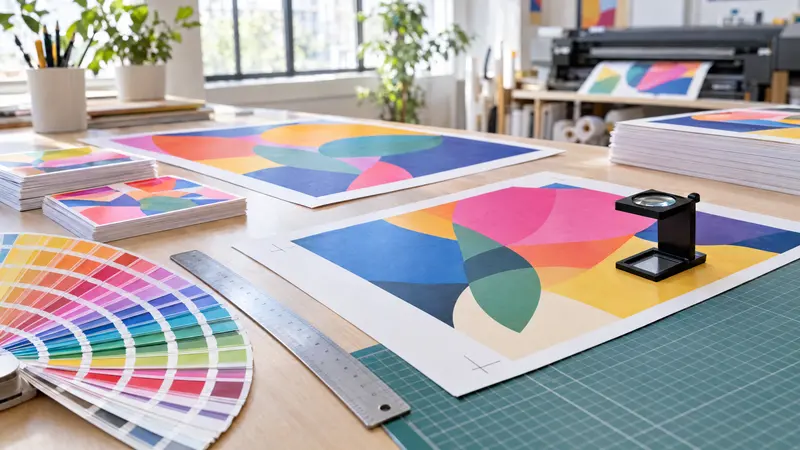
The most important advertising materials for a food business are the menu (A4, A5 or DL on 300–350 g/m² board, ideally laminated), a takeaway flyer (DL 99×210 mm or A5 on 130–170 g/m² paper) and a window poster (A3–A1). Round these off with signage, packaging stickers and 1080×1080 px social media posts. Prepare print files at 300 DPI in CMYK, with 3 mm bleed and a 3–5 mm safe margin, and set prices and phone numbers in at least 9–10 pt type.
Example designs for this industry
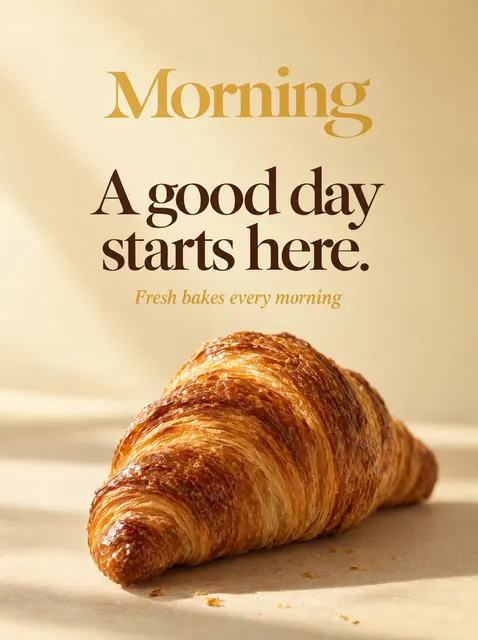
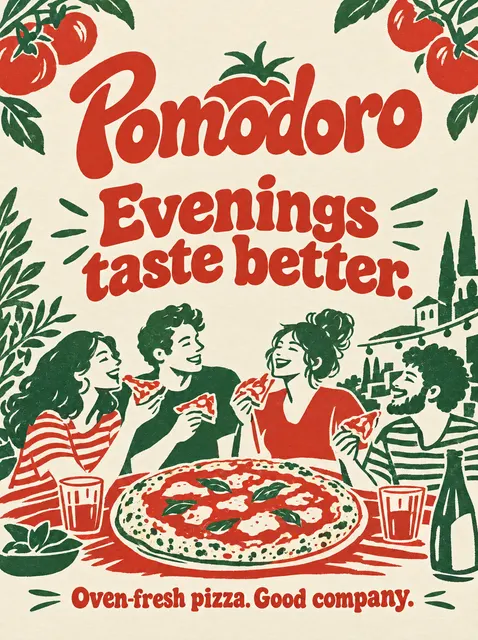

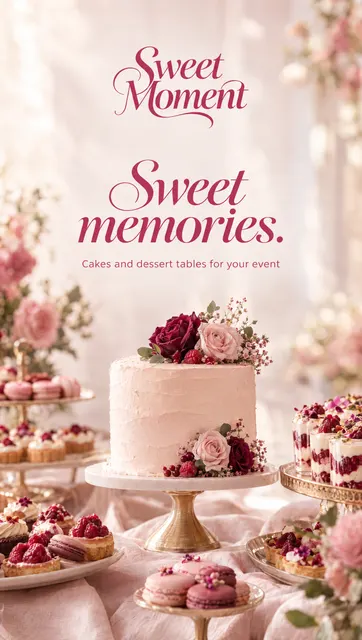
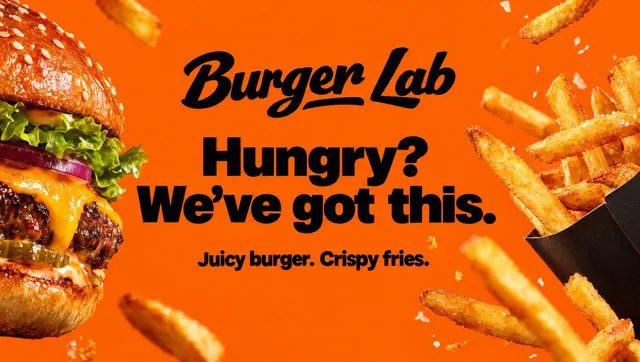


Do you run a restaurant, pizzeria, café, food truck or bakery? In hospitality, advertising works best when customers can see straight away what they'll eat, what it costs and how to order. Below you'll find the materials that genuinely drive sales, 10 proven ideas, ready-made slogans, advice on colour, a calendar of key dates through the year and the mistakes worth avoiding. Beneath the article you'll see example designs from our hospitality gallery.
Which advertising materials matter most for a food business?
In a restaurant or café, advertising has two jobs: to draw passers-by inside and to make customers come back or order a takeaway. That's why the foundations are the menu customers hold in their hands and the flyer that ends up at home or in the office, sitting by the phone. Posters and signage work on footfall from the street, while social media graphics keep your regulars engaged.
The paper weight depends on how long the item needs to last. A table menu is handled hundreds of times, so it needs thick board and lamination, whereas a flyer posted through letterboxes can be thinner and cheaper.
| Item | Typical format | Paper / finish | What it's for |
|---|---|---|---|
| Menu / price list | A4, A5, DL, 210 mm square | 300–350 g/m², matt or gloss lamination | Table menu, counter menu |
| Flyer | DL (99×210 mm), A5, A6 | 130–170 g/m² silk or gloss | Takeaway menu, offers, delivery |
| Poster | A3, A2, A1 | 150–200 g/m², paper or vinyl for windows | Dish of the day, new items, events |
| Sign / board | e.g. 60–120 cm wide | Dibond, PVC foamboard, acrylic | Shopfront and food truck signage |
| Sticker / label | any shape | Vinyl, self-adhesive paper | Packaging, jars, pizza boxes |
| Voucher | DL, 210×100 mm, A6 | 300–350 g/m² | Gifts, loyalty cards |
| Post / Stories | 1080×1080 px, 1080×1920 px | RGB, digital file | Daily menu, announcements, offers |
10 advertising ideas for restaurants, pizzerias and cafés
You don't have to do everything at once. Pick 2–3 ideas that suit your venue and roll them out consistently, in a single visual style.
- Takeaway menu flyer: print a shortened menu in DL format with a large phone number and delivery hours; pop one in with every order so customers have it to hand the next time they're hungry.
- Dish-of-the-day window poster: A2 or A1 with one large photo, the dish name and a price that's legible from several metres away; change it every season so passers-by notice something new.
- Loyalty card: an 85×55 mm business card with stamp boxes, e.g. every 10th coffee free; keep them by the till and offer one to every customer.
- Packaging stickers: a round sticker with your logo and website on a pizza box or cup turns every takeaway order into an advert.
- Gift voucher: a DL voucher for dinner for two or a breakfast; promote it ahead of Christmas, Mother's Day and Valentine's Day.
- Event roll-up banner: 85×200 cm with your logo and slogan, to stand by your food truck, at a fête or a tasting; print files are prepared at 1:10 scale.
- Wall or board menu: a large poster or board above the counter works well in cafés and bakeries, where customers choose while queuing.
- Flyer for local businesses: a lunch or catering offer left at nearby offices and shops, with the set price and serving times.
- Social media series: a fixed 1080×1080 px template for the daily menu and 1080×1920 px for Stories, in the same colours as your print, so your venue is instantly recognisable.
- Fence or façade banner: 300×100 cm announcing an opening, a beer garden or a new menu, visible from the street or car park.
What should go on a flyer or poster? Sample slogans
A good food flyer answers five questions: what you'll eat, what it costs, where it is, when it's open and how to order. The content should run in this order: slogan or offer name, photo or illustration, specific items with prices, phone number and address, opening hours. A poster has even less space, so stick to one message and a price.
Slogans should be short and specific. Instead of generic claims such as 'the best food in town', say what the customer actually gets: flavour, speed, price or another benefit.
- 'Wood-fired pizza, delivered to your door'
- 'Lunch of the day: soup + main, Monday to Friday'
- 'Coffee and homemade cake: take a moment'
- 'Sourdough fresh from the oven, every morning'
- 'Order by phone, collect without the wait'
- 'New seasonal menu: come and see what's cooking'
- 'Food truck burgers: find out where we are this weekend'
- 'Give the gift of dinner: a voucher for our restaurant'
Which colours and styles suit a food business?
In hospitality, colour affects appetite and mood. Warm shades such as red, orange and yellow suggest energy and fast food, while greens, beiges and browns evoke natural ingredients, coffee and bread. Dark backgrounds with plenty of space signal a more upmarket price point.
The food photo matters most: sharp, bright and high-resolution (300 DPI at the final print size). One good photo will sell more than ten small ones, and phone shots taken in the evening under yellow light usually print dark and unappetising.
| Type of venue | Colours | Visual style |
|---|---|---|
| Pizzeria | red, green, cream, wood tones | rustic, Italian, hand-lettered accents |
| Café | browns, beige, pastels, black | minimalist, lots of light, delicate typography |
| Fine dining restaurant | black, graphite, gold, deep green | elegant, serif fonts, plenty of white space |
| Bistro / canteen | orange, yellow, white | simple, clear, large prices |
| Food truck | strong contrasts, neons, yellow, black | street food, bold typography, illustrations |
| Bakery / patisserie | beiges, golden browns, dusky pink | homely, traditional, close-up photos |
Hospitality calendar: when should you print your advertising?
Plan seasonal advertising well ahead: design, printing and distribution usually take 2–4 weeks, and customers book tables for holidays and office parties earlier than for an ordinary dinner. The overview below will help you plan your year.
| Period | Occasion | What to prepare |
|---|---|---|
| January | New Year, Burns Night, winter menus | vouchers, poster for a family lunch menu |
| February | Valentine's Day, Pancake Day | Valentine's menu, pancake poster in the café or bakery |
| March–April | International Women's Day, Mother's Day, Easter | flyer for Easter orders, posts |
| May–June | bank holidays, First Communions, Father's Day | party and function offers, vouchers, children's menu |
| July–August | outdoor dining season, fêtes, summer holidays | beer garden banner, food truck roll-up, summer menu |
| September–October | back to work and school, autumn season, Halloween | lunch flyers for local businesses, new menu |
| November | Bonfire Night, Black Friday | event poster, voucher promotion |
| December | office Christmas parties, Christmas, New Year's Eve | Christmas catering flyer, invitations, vouchers |
Common mistakes in restaurant and café advertising
Most failed hospitality adverts fall down on small details that customers spot immediately. Run through this list before every print job.
- Too many items on the flyer: a full menu in small print doesn't tempt anyone; show your bestsellers instead and point to your website for the full menu.
- Missing or hidden prices: customers who don't know the price are less likely to call.
- A small phone number: on a takeaway flyer this is the most important element and should be visible within the first second.
- Poor photos: dark, blurry or downloaded from the internet without a licence; a stock photo that doesn't match your dishes misleads customers.
- Menu paper that's too thin: an unlaminated menu looks tired after just a few weeks.
- No bleed: the background stops exactly at the edge, leaving a white strip after trimming.
- Out-of-date information: old opening hours, changed prices or a number that no longer works.
- Every item in a different style: different colours on the sign, menu and social media weaken your venue's recognisability.
How to prepare print files for menus, flyers and posters
Set up your print file at the trimmed size plus 3 mm bleed on every side, and keep important content (prices, phone number, logo) at least 3–5 mm inside the trim line. Photos must be 300 DPI at the final size and colours should be in CMYK. The safest format is a PDF with embedded fonts; for roll-ups and banners, large-format printers usually accept PDFs at 1:10 scale.
If you don't have your own designer, you can order a menu, flyer or post design from plakaty.shop (wielkareklama.eu studio): fill in a short form and within minutes you'll receive proposals as PNG and PDF with 3 mm bleed, from €12 per proposal. Whoever prepared the design, always read through every dish name, price, phone number and address yourself before printing.
Checklist
- Prices, dish names and allergens checked against the current menu
- Phone number, address and opening hours read digit by digit
- 3 mm bleed and a 3–5 mm safe margin from the trim line
- Photos at 300 DPI at the final size, bright and sharp
- Colours in CMYK, fonts embedded in the PDF
- Prices and phone number in at least 9–10 pt type on the flyer
- Paper weight and lamination matched to how long the item needs to last
- Colours and logo consistent with your signage and social media
FAQs
What flyer format works best for a pizzeria or restaurant that delivers?
DL (99×210 mm) is the most popular choice, as it fits a shortened menu, slips easily into a takeaway bag and goes through a letterbox. For a longer menu, a double-sided A5 or a folded A4 works better. 130–170 g/m² paper is fine for distribution.
What paper should a restaurant menu be printed on?
Table menus are best printed on 300–350 g/m² board with matt or gloss lamination, which protects against stains and lets you wipe the menu clean. If you change prices often, consider a cheaper single-sheet menu replaced each season rather than an expensive bound one.
What size poster should go in a shop window?
For a window seen from the pavement, A2 or A1 works well, as the headline and price are legible from several metres away. A3 is enough for a door, counter or board by the entrance. The greater the viewing distance, the less text and the larger the lettering.
What should a food flyer include?
The venue name and logo, a short slogan, selected dishes with prices, phone number, address, opening hours and whether you offer delivery or collection. It's worth adding a QR code linking to the full menu or online ordering. Anything beyond that usually just reduces legibility.
How do you advertise a food truck that changes location?
Focus on portable materials: an 85×200 cm roll-up banner, a menu board by the serving hatch and packaging stickers with your social media handle. Announce your current pitches in 1080×1920 px Stories using a consistent template, so customers recognise your graphics straight away.