Advertising for Crafts and Handmade Goods: Flyers, Posters and Graphics — Ideas and Examples
The most effective printed materials for a craft workshop are a 50×90 mm product swing tag, an 85×55 mm business card (the UK and Irish standard; 90×50 mm elsewhere in Europe) on 350 g/m² board, an A5 or DL flyer with your offer and workshop dates, and an A3 poster for cafés, libraries and community centres. Prepare print files at 300 DPI with 3 mm bleed and a 3–5 mm safe area, and set the main flyer text at 9 pt or larger. For social media, use 1080×1080 px graphics for posts and 1080×1920 px for stories.
Example designs for this industry


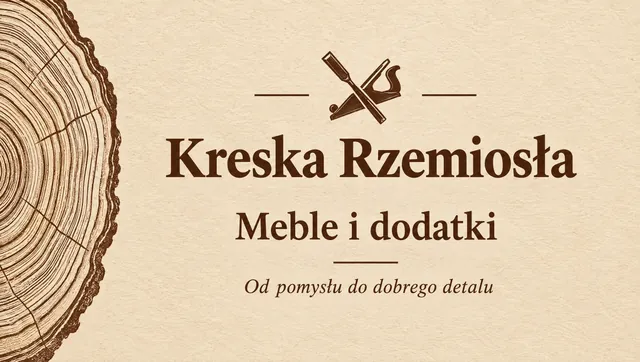
Do you run a pottery studio or a joinery workshop, make made-to-measure clothing or sell handmade goods? Your products sell through touch, story and trust, so your advertising needs to reflect the handmade quality while making it crystal clear what you offer, where and for how much. Below you'll find the materials that work best in this sector, 10 ready-to-use ideas, sample slogans, colour choices, a calendar of seasonal opportunities and the mistakes worth avoiding.
Which advertising materials matter most for craft and handmade businesses?
In handmade, advertising starts on the product itself. Swing tags, labels and packaging stickers reach the customer together with the item they bought, and they're what brings them back or prompts them to recommend you. Flyers and posters come second: they draw in new people, especially for workshops.
Save flyers and posters for offers with a specific date or price: workshops, class sign-ups, craft fairs, Christmas orders. Business cards and swing tags need to last, so print them on heavier board (300–350 g/m²), and flyers on 130–170 g/m² paper.
| Item | Typical format | What it does for your studio |
|---|---|---|
| Swing tag / hang tag | 50×90 mm, 60×120 mm | On the product: who made it, what from, how to care for it |
| Business card | 85×55 mm, 90×50 mm | In every parcel and on your stall |
| Label / sticker | Any shape, e.g. 40–50 mm circle | Sealing packaging, identifying products |
| Flyer | A5, DL, A6 | Workshop calendar, list of services |
| Poster | A3, A2 | Cafés, libraries, community centres |
| Gift voucher | DL, A6 | A gift: a workshop or a product |
| Roll-up banner | 85×200 cm | Trade shows, markets, craft fairs |
| Post / story | 1080×1080 px / 1080×1920 px | New pieces, available places, behind the scenes |
10 advertising ideas for a craft studio
You can test each of these ideas with a small print run before ordering in bulk. Pick two or three that suit how you sell: an online shop, a physical studio or markets and fairs.
- Swing tag with the product's story — a double-sided 50×90 mm tag: logo and name on the front, materials, care instructions and the maker's signature on the back. Make the string hole about 4–5 mm, at least 5 mm from the edge.
- A business card in every parcel — add a QR code linking to your profile or shop and a short request for a review or a photo with the product. Print the QR code at a minimum of 2×2 cm.
- Workshop gift voucher — DL format, with space for a name, a voucher number and an expiry date. Sell it before Christmas and Mother's Day as an 'experience instead of a thing' gift.
- Flyer with a workshop calendar — double-sided A5: a photo and headline on the front, dates, prices, number of places and how to book on the back. Update it each season rather than printing a year in advance.
- Posters where your customers spend time — A3 in a café, library, community centre or language school. Ask permission first and leave a stack of A6 flyers alongside.
- Sticker to seal the packaging — round, 40–50 mm, with your logo and website. An inexpensive way to make a parcel look neat and branded.
- Care label — for ceramics: whether it's dishwasher and microwave safe; for textiles: washing temperature; for wood: how to oil it. It answers customers' questions and builds trust.
- Roll-up banner for trade shows and markets — 85×200 cm with the studio name, one large product photo and a headline at the top. The bottom 50 cm or so will be hidden by the table and people, so don't put any content there.
- Workshop completion certificate — A4 with the participant's name and the course title. People photograph it and post it, tagging your studio.
- Price list — for a dressmaker (taking up hems, replacing zips, alterations) or a joiner (restoration, bespoke furniture 'from' prices), on A4 or A5 at the counter and as a PDF to send out.
What should you put on a flyer or poster? Sample slogans
A good maker's flyer has a simple layout: a short headline, what the customer gets, the specifics (date, duration, 'from' price, number of places), a call to action and contact details. The headline doesn't need to be clever; it should say straight away what you do.
Keep a poster to 3–4 pieces of information at most, as people read it in passing. Move the details to a flyer, your website or a QR code.
- Pottery: 'Make your first mug. Beginners' workshops, all materials included.'
- Joiner: 'Solid wood furniture made to measure. We measure, design and build.'
- Dressmaker: 'Hems, repairs and alterations. Made-to-measure tailoring right here in your neighbourhood.'
- Handmade: 'Made by hand, one of a kind. A gift nobody else can give.'
- Workshops: 'Give time, not things. A workshop voucher for two.'
- Calls to action: 'Book now — 8 places per group', 'Call to arrange a fitting', 'Order by the end of November and we'll have it ready for Christmas'.
Which colours and style suit handmade goods?
Earthy, natural colours work well in this sector: terracotta, ochre, beige, olive and bottle green, navy, off-white. You can set the headline in a serif or handwritten typeface, but always use a plain sans serif for body text, because handwritten fonts become illegible at small sizes. A good product photo taken in natural light against a calm background does most of the work.
Kraft paper and uncoated eco papers suit handmade goods beautifully, but bear in mind that colours darken on brown board, and white text can't be printed in standard CMYK without an additional white ink. On kraft, choose dark, high-contrast lettering.
| Sector | Colours | Style |
|---|---|---|
| Pottery studio | Terracotta, sand, sage, off-white | Plenty of light, close-ups of glaze texture |
| Joiner | Warm browns, graphite, bottle green | Raw, solid, close-ups of wood grain |
| Dressmaker | Navy, dusty pink, beige, black | Elegant, plenty of white space |
| Handmade goods and jewellery | Pastels, mustard, olive | Light, handwritten accents, botanical motifs |
| Workshops | One strong accent on a neutral background | Photos of people at work, smiles, hands |
A calendar of seasonal opportunities for makers
Print seasonal materials at least 4–6 weeks ahead, because customers plan gifts and bookings earlier than you might think. Most handmade sales fall in the run-up to Christmas, so announce your December offer as early as October.
| Period | Occasion | What to prepare |
|---|---|---|
| January–February | Valentine's Day, February half-term | Workshops for couples, children's sessions, gift vouchers |
| March–April | International Women's Day, Mother's Day, Easter | Themed workshops, vouchers, craft fairs, seasonal labels |
| May–June | Father's Day, First Communions, weddings, end of the school year | Vouchers, teacher gifts, invitations |
| July–August | Summer holidays, markets, tourists | Holiday clubs, roll-up and banner for your stall |
| September | Back to classes | Flyer for sign-ups to year-round courses |
| October–November | Christmas preparations | Last order dates, poster, social posts |
| December | Christmas, Christmas markets | Vouchers, thank-you cards for parcels |
How should you prepare files and choose paper for printing?
Prepare every print file at 300 DPI at final size, with 3 mm bleed on every side and important elements at least 3–5 mm inside the trim line. A photo for an A3 poster (297×420 mm) should be around 3508×4961 px; a phone photo is usually fine if it's sharp and well lit. Printers often accept roll-up banners and large banners as a PDF at 1:10 scale.
If you don't have the time or design software, at plakaty.shop (wielkareklama.eu studio) you can fill in a short form and receive flyer, swing tag or poster designs as PNG and PDF files with bleed, from €12 per design. Whoever does the design, always check the wording, phone number and address yourself before printing.
- Business cards and swing tags: 300–350 g/m² board, matt or kraft.
- Flyers: 130–170 g/m², matt coated for photos or uncoated for a natural feel.
- Indoor posters: 135–200 g/m²; matt coated paper reduces glare.
- Labels for products exposed to water or grease: film instead of paper.
Common mistakes in handmade advertising
The most common problem is trying to show everything at once. A flyer with a collage of twenty photos looks like a catalogue and sells nothing, whereas one good photo with a clear headline works better.
- A handwritten typeface for all the text, making opening hours and phone numbers impossible to read.
- No 'from' price or date, so customers can't tell whether the offer is for them.
- Low-resolution photos that turn blurry when enlarged for a poster.
- White or light text on kraft paper without white ink.
- No bleed and text right at the edge, which gets cut off when trimmed.
- A QR code that's too small or leads to an out-of-date page.
- A flyer printed for the whole year with dates that quickly go out of date.
Checklist
- The headline says straight away what you do
- There's something specific: a date, a 'from' price or number of places
- Phone number, address and opening hours checked in person
- Photos at 300 DPI at final size
- 3 mm bleed and a 3–5 mm safe area
- Main text at least 9 pt, no handwritten typeface
- QR code at least 2×2 cm and tested on a phone
- Only dark, high-contrast lettering on kraft
- Paper weight suited to the item: swing tags 300–350 g/m²
FAQs
How can I promote a pottery studio or craft workshops locally?
Put up A3 posters where your customers spend time: in cafés, libraries and community centres, and leave A6 flyers with your dates alongside. Add workshop gift vouchers ahead of Christmas and Mother's Day. Give every participant a business card or a certificate featuring your studio's name, so they can easily recommend you.
What paper should I choose for handmade swing tags?
Usually 300–350 g/m² board, matt or kraft, because a swing tag needs to be rigid and look natural. Typical formats are 50×90 mm and 60×120 mm. Plan the string hole at least 5 mm from the edge so it doesn't fall within the text area.
What flyer size should a craft workshop choose?
A5 works well when you need room for a workshop calendar and prices. DL (99×210 mm) is handy for slipping into parcels and for display racks, while A6 is ideal for leaving by the till. The choice depends on how much content you have and where the flyer will be displayed.
Is it worth printing on kraft paper?
Yes, if your brand is natural and eco-friendly, as kraft captures the character of handmade goods well. However, you need to accept that colours and photos will come out darker, and white text requires an additional white ink. Simple graphics and dark lettering work best on kraft.
What should I put on a workshop gift voucher?
The name of the workshop, how many people the voucher covers, the expiry date, the voucher number and how to book a date. Leave space for the recipient's name and a short personal message. Put your contact details and studio address on the back.