Shop opening advertising: 10 ideas for your launch
Start advertising your opening about 3 weeks beforehand. First, put up a 300×100 cm banner (frontlit 440–510 g/m², eyelets every 50 cm) and an A2 or A1 'Opening soon' poster in the window. Between 3 and 7 days before launch, deliver A6 or DL leaflets on 130–170 g/m² coated paper, along with vouchers and invitations on 300–350 g/m² board. Supply print files as PDFs with 3 mm bleed at 300 DPI, and prepare social posts at 1080×1080 px and 1080×1920 px.
A new shop, café or salon only gets one chance to make a first impression. Local residents should know about it before you open the doors. Below you will find 10 proven ideas, each with specific formats and print specifications. You also get a three-week pre-opening schedule to help you order everything on time, without last-minute corrections.
When should you start advertising your opening?
The ideal moment is about 3 weeks before opening day. A campaign that starts earlier easily goes cold, because people forget the date. One that starts too late leaves no time for printing, installing the banner and building reach on social media.
Large-format printing and leaflets usually take a few working days, on top of design and proof approval. So only order materials showing the opening date once you are sure of it. If the date might slip, simply put 'Opening soon' on the banner and poster.
10 advertising ideas for your shop opening
You don't need to do everything at once. Five or six well-chosen activities sharing one consistent design work better than ten random ones. Pick the ones that suit your trade and location.
- Local leaflets – print A6 or DL leaflets with the opening date, address and a welcome offer. Deliver them to the nearest streets and blocks of flats 3–7 days before launch.
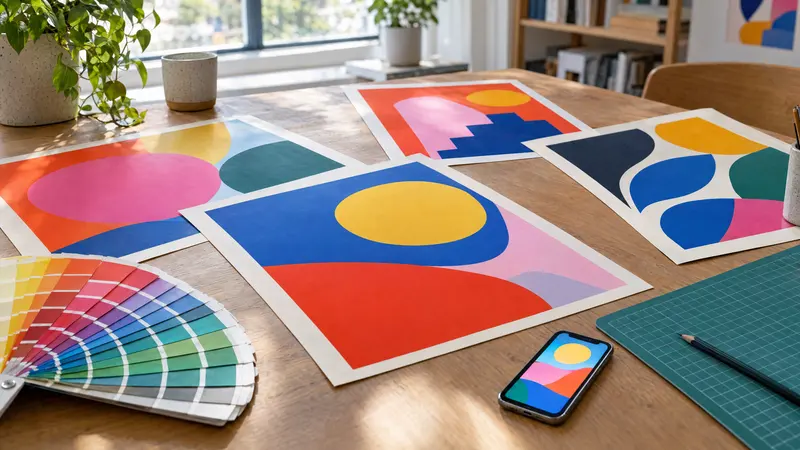
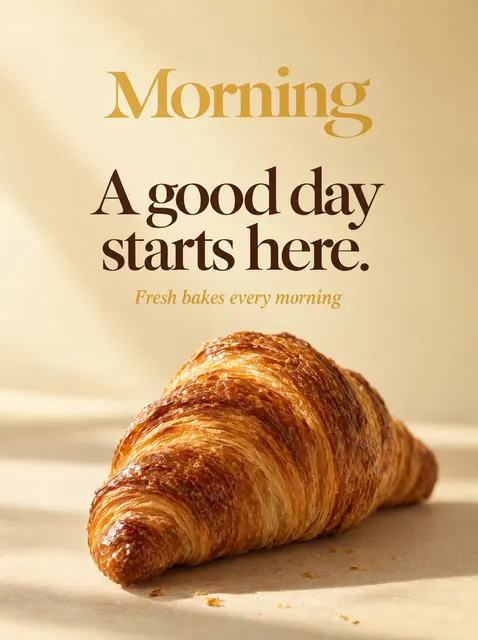
- Window poster – put up an A2 or A1 'Opening soon' poster with the date and time. Once you open, swap it for a 'Now open' version so the window doesn't look empty and uninviting.
- Banner on the façade or fence – a 300×100 cm or 500×100 cm banner with the business name and a slogan visible from the street. For a fence in an exposed, windy spot, choose mesh, as it lets the wind through.
- Window stickers and vinyl – a countdown to opening day or a large logo in self-adhesive vinyl. Your window then becomes an advertising space around the clock.
- Social media posts and stories – share photos of the preparations, introduce the team and run a countdown in your stories. Prepare posts at 1080×1080 px and stories at 1080×1920 px.
- Opening voucher – a discount or freebie valid for a set period, such as the first two weeks. Use DL or A6 on 300–350 g/m² board, ideally numbered or with a code so you can track redemptions.
- Invitations for neighbours – hand out A6 or DL invitations to nearby residents and businesses for the day before the official launch. A 'soft opening' like this builds good relationships and lets you test your service.
- Roll-up banner by the entrance – on opening day, stand an 85×200 cm roll-up with the day's offer or menu. Afterwards, it will come in handy at trade fairs, events and inside the premises.
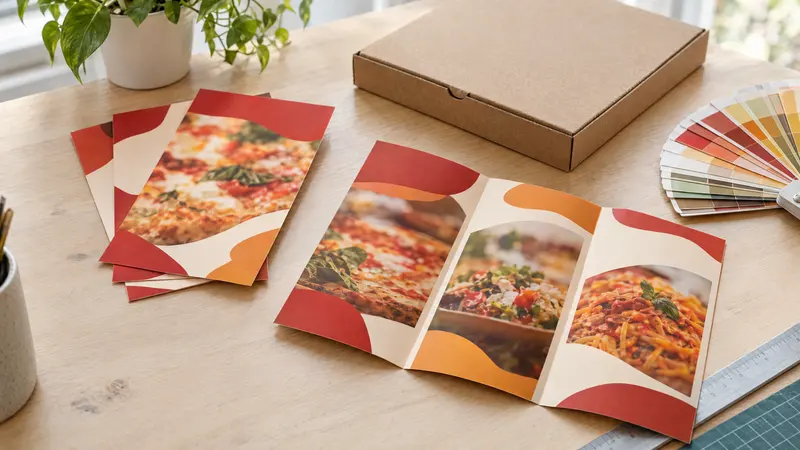
- Takeaway menu or price list – for food businesses and services, prepare an A5 or DL menu for customers to take home. They will come back to it when deciding where to order next time.
- Teaming up with nearby businesses – ask neighbouring shops to display an A3 poster or keep a stack of your leaflets. In return, offer to do the same for them or run a joint promotion.
Which formats and print specifications should you choose?
The specification depends on where the item will hang and how long it needs to last. A poster in a sunny window fades faster, so it is worth asking your printer about UV-resistant printing or lamination. The overview below is a safe starting point for most businesses.
| Item | Format | Material / specification | Notes |
|---|---|---|---|
| Leaflet | A6 (105×148 mm), DL (99×210 mm), A5 | Matt or gloss coated paper, 130–170 g/m² | Text at least 8–9 pt |
| Window poster | A2 (420×594 mm), A1 (594×841 mm) | 150–200 g/m² paper or self-adhesive vinyl | Sunny window: lamination or UV inks |
| Banner | 300×100 cm, 500×100 cm | Frontlit 440–510 g/m² or mesh | Welded hems and eyelets roughly every 50 cm |
| Voucher | DL, 210×100 mm, A6 | 300–350 g/m² board | Numbering, expiry date |
| Invitation | A6, DL, square | 300–350 g/m² board | Can be personalised with a name |
| Roll-up banner | 85×200 cm, 100×200 cm | Roll-up film or fabric | Key content above roughly 80 cm from the floor |
| Business card | 85×55 mm, 90×50 mm | 350 g/m² board | Add one to every takeaway order |
| Social media | 1080×1080 px, 1080×1920 px | RGB, PNG or JPG | In stories, keep clear of about 250 px at the top and bottom |
Schedule: 3 weeks before opening
Plan your schedule backwards from the opening date. Start with the materials that stay up longest (banner, window), and finish with those meant to remind people of the date (leaflets, invitations). Allow at least a few working days' leeway between ordering and collecting your print.
| When | What to do | Materials |
|---|---|---|
| 21–15 days before | Finalise the name, logo and colours; commission the designs; put up the banner and 'Opening soon' poster; set up your social profiles and map listing | Banner, poster, window vinyl, first post |
| 14–8 days before | Approve and print leaflets, vouchers, invitations and menus; arrange things with neighbouring businesses; post 2–3 times a week | Leaflets, vouchers, invitations, menus, A3 posters |
| 7–1 days before | Deliver leaflets and invitations; run a daily countdown in stories; hold a day for neighbours | Leaflets, invitations, stories |
| Opening day | Set up the roll-up, hand out vouchers, take photos and post live updates | Roll-up banner, vouchers, business cards |
| 1–2 weeks after | Change the poster to 'Now open', thank your guests on social media, count redeemed vouchers | New poster, posts |
What should you put on the leaflet, poster and banner?
Every opening item answers four questions: what, where, when and why it's worth coming. The order of importance never changes: business name, opening date, the benefit (e.g. '20% off at launch'), address, and finally opening hours and contact details. Anything beyond that just drowns out the message.
Banners and posters are read on the move, so keep them to a few words. On a banner visible from the street, the name should be roughly 15–20 cm tall at the very least. The final size, however, depends on viewing distance and background contrast. A leaflet can carry more, such as a small map or a QR code linking to your profile.
- Name and logo – always in the same layout on every item.
- Opening date and time – large, legible and without abbreviations such as 'Sat.'.
- Launch offer – one specific benefit rather than a list.
- Address with a landmark – e.g. 'next to the chemist'.
- Contact – phone number, social media profile or a QR code.
How do you prepare print files that need no corrections?
Supply leaflets, posters, vouchers and invitations as PDFs at trim size with 3 mm bleed on every side. The required resolution is 300 DPI, and colours should be in CMYK. Keep text and logos within the safe area, at least 3–5 mm from the trim line. A QR code should be no smaller than about 2×2 cm.
For large formats such as banners and roll-ups, printers usually accept files at 1:10 scale. For a banner, 100–150 DPI at 1:1 is enough, which corresponds to 1000–1500 DPI in a 1:10 file. Leave about 5 cm clear along the banner edges for the hems and eyelets. Requirements can vary between printers, so always check the specification before sending your file.
If you don't have a designer, you can order ready-made design proposals via the form at plakaty.shop (wielkareklama.eu studio). The 'Good Start' package at €12 gives you one proposal, and the 'Small Campaign' package at €35 gives you six different ones. You receive PDF files with 3 mm bleed, with the banner and roll-up at 1:10 scale. Whoever prepared the design, read every word, phone number and address yourself before it goes to print.
What should you bear in mind with leaflets and banners in public spaces?
To deliver to letterboxes in blocks of flats and gated developments, you need permission from the managing agent or residents' association. Skip any letterbox with a 'No junk mail' or 'No leaflets' sticker. It's a simple rule for your reputation, and neighbours quickly remember who ignores it.
A banner on someone else's fence or building requires the owner's permission. Many local authorities also have planning rules that restrict the size and type of advertising on building façades. The rules vary from place to place, so before ordering a large banner, check with your local council or the building's managing agent.
Checklist
- Opening date, time and address are identical on every item
- Phone number, address and profile names read and checked by hand
- PDF with 3 mm bleed, 300 DPI, CMYK colours
- Text and logos at least 3–5 mm from the trim line
- Banner at 1:10 scale with about 5 cm clear for eyelets
- Voucher shows an expiry date, terms and numbering
- QR code tested with a phone and no smaller than 2×2 cm
- Permission from the managing agent or owner for banners and leaflets in buildings
- Posts and stories saved at 1080×1080 px and 1080×1920 px
FAQs
How far in advance should I start advertising my shop opening?
Ideally about 3 weeks before opening day. Put up the banner and 'Opening soon' poster right at the start, and deliver leaflets and invitations 3–7 days before launch. That way the news stays fresh and you have time in hand for printing.
How many leaflets should I print for my opening?
Count the homes and businesses in the immediate area you can realistically cover on foot, then add extra for handing out at the door. For a small neighbourhood business, anywhere from a few hundred to around 2,000 is usually enough. A larger print run lowers the cost per leaflet, but there's no point if you can't hand them all out in time.
Which banner should I choose for a shop or café opening?
A 300×100 cm frontlit banner at 440–510 g/m², with welded hems and eyelets roughly every 50 cm, usually works best. For a fence in a windy spot, mesh is the better choice. Keep the content to the name, opening date and one benefit.
What should I offer on an opening voucher?
One simple benefit, such as a percentage discount, a second item free or a complimentary extra service. Include a clear expiry date and terms of use. Numbering or a code will help you work out how many people came in thanks to the vouchers.
Do I need permission to put a banner on a building?
On someone else's building or fence, you always need permission from the owner or managing agent. In addition, some local authorities have planning rules setting the permitted size and type of advertising. Check the rules with your local council before you order.