Which Paper for Flyers, Posters and Business Cards: Weights and Types
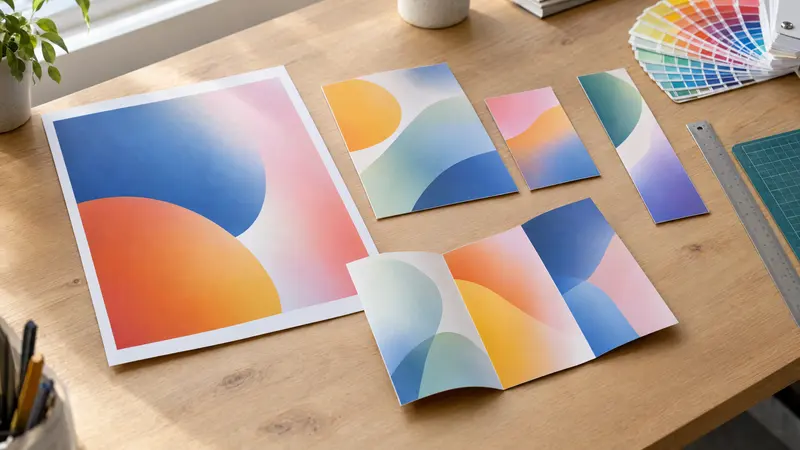
For flyers, most people choose coated paper at 130–170gsm, while premium flyers or rigid card-style flyers go on 250–350gsm. Posters are usually printed on 135–200gsm coated stock and business cards on 300–350gsm board, often with matt lamination. Gloss coated paper gives photos more vivid colour, matt offers better readability without glare, and uncoated paper lets you write on the print with a biro.
Print the same design on thin gloss paper and on heavy matt board and you'll perceive it completely differently. The paper decides whether a flyer ends up in the bin within a second or stays on someone's desk, whether a poster survives a week in a shop window, and whether a business card bends in a wallet. Below you'll find specific paper weights, the differences between matt coated, gloss coated and uncoated paper, the types of finish available, and a table to help you choose the right stock for each product.
What does paper weight mean?
Paper weight (grammage) is the mass of one square metre of paper, given in g/m² – in the print trade you'll usually hear it shortened to "170gsm". The higher the weight, the thicker and stiffer the paper tends to be, but this isn't a hard and fast rule. Uncoated paper (offset or eco) of the same weight is noticeably thicker and bulkier than coated paper, so 300gsm uncoated can feel stiffer in the hand than 350gsm coated.
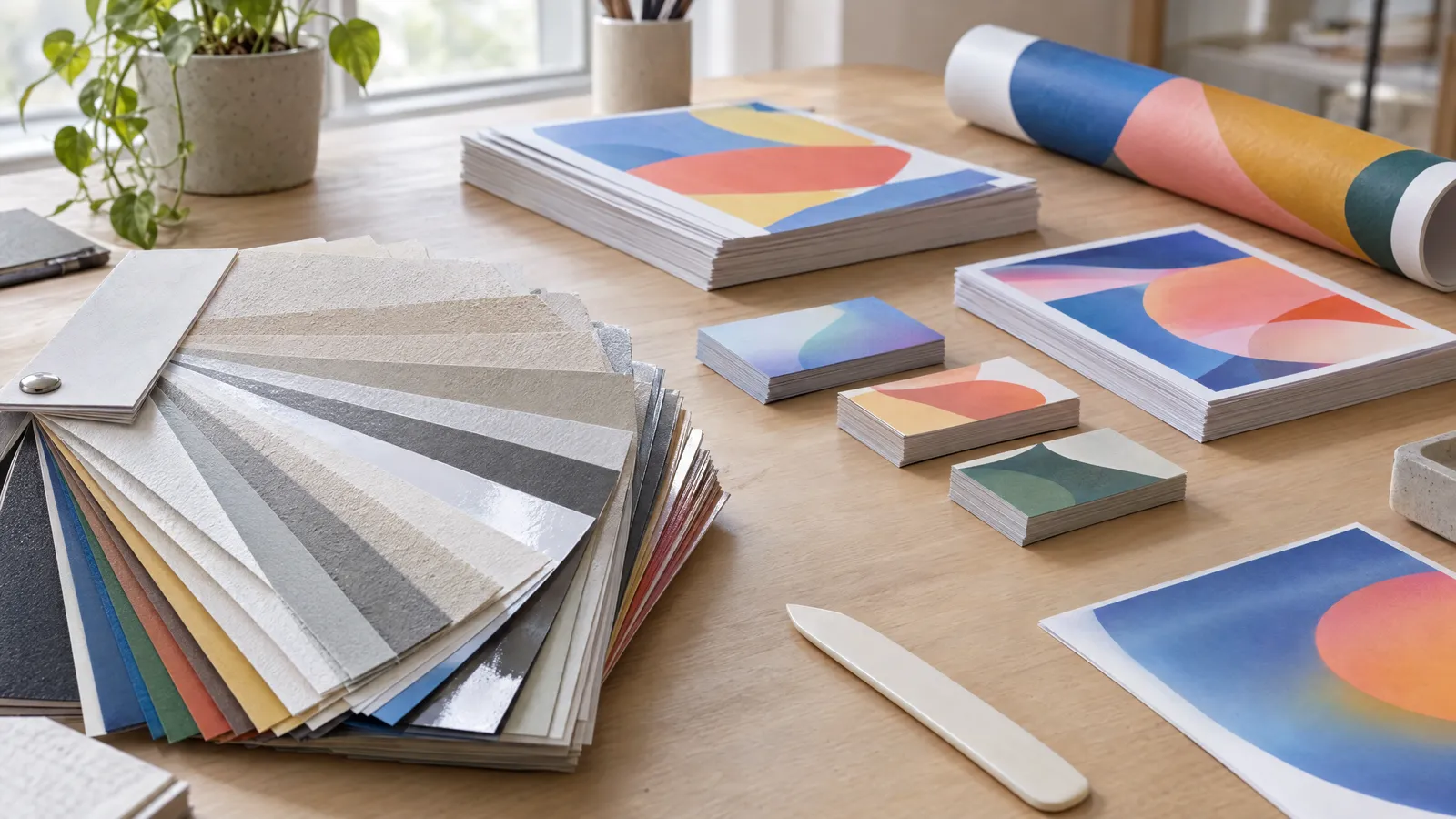
That's why, for an important order, it's worth asking the printer for a paper swatch book or a proof print. The number on the spec sheet alone won't tell you how a leaflet will behave once folded or how rigid a business card will be.
| Paper weight | How it feels in the hand | Typical use |
|---|---|---|
| 80–90gsm | ordinary printer paper | letterheads, low-cost letterbox flyers, forms to fill in |
| 115–135gsm | thin, soft sheet | mass-distribution flyers, indoor posters, folded leaflets |
| 150–170gsm | solid, slightly stiff | standard flyers, posters, disposable menus |
| 200–250gsm | light card | premium flyers, covers, menus, creased folded cards |
| 300–350gsm | board | business cards, invitations, vouchers, swing tags, card-style flyers |
| 400gsm and above | heavy board, often laminated together (duplexed) | premium business cards, labels, luxury invitations |
Which paper weight for flyers?
For flyers handed out in large quantities on the street or posted through letterboxes, 130gsm coated paper is enough. It's inexpensive, light and reproduces colour well. If the flyer needs to represent your business – for example sitting on a reception desk or being handed to customers in person – go for 170gsm, as it's noticeably stiffer and doesn't crease as easily.
Card-style flyers (often A6 or DL, similar to a postcard) are printed on 250–350gsm. They stay with the recipient for longer, but they cost more and add weight if you're sending them by post. With folded leaflets (e.g. A4 folded to DL), remember creasing: from around 170gsm, coated paper cracks along the fold, particularly with a dark background printed to the edge.
- A6, DL for mass distribution: 130–170gsm coated
- A5, A4 single- or double-sided: 130–170gsm coated
- Folded leaflet: 115–170gsm, creased from around 170gsm
- Premium card-style flyer: 250–350gsm, often with matt lamination
Matt or gloss coated paper?
Coated paper has a smooth surface coating that keeps the ink sitting on top, so colours are rich and sharp. Gloss coated paper brings out photos, strong colours and contrast, which is why it works well for restaurant, tourism and product flyers. Matt coated paper has no glare, makes longer text easier to read and looks more refined, although colours are a little more subdued.
A middle ground is silk coated paper (semi-matt), which combines good photo reproduction with a lower sheen. Without special treatment, you won't be able to write comfortably on any coated paper with a biro, so uncoated paper is a better choice for coupons and forms.
| Feature | Gloss coated | Matt coated |
|---|---|---|
| Colours and photos | very rich, high contrast | more subdued, natural |
| Glare under light | noticeable | virtually none |
| Text readability | good for short texts | very good, even for long texts |
| Impression | dynamic, promotional | elegant, understated |
| Best for | photo-heavy flyers, posters | service flyers, menus, brochures, business cards |
Uncoated and eco paper – when to choose it?
Uncoated (offset) paper has no coating layer, so the ink partly soaks in. Colours are less saturated and fine detail is slightly softer, but the paper has a pleasant, natural texture and you can write on it with a biro. It's a good choice for vouchers, fill-in coupons, notepads, letterheads and print with a natural, handcrafted feel.
Eco papers are most often recycled papers (grey, cream or with visible flecks) or FSC-certified papers, which confirm the fibres come from responsibly managed sources. They suit brands connected with nature, cafés, local produce and natural cosmetics. Bear in mind that lamination makes recycling harder, so eco paper is usually printed without it.
When printing on uncoated paper, it's worth preparing the design with a colour profile for uncoated stock and avoiding very dark, solid areas of colour. Dark backgrounds come out flatter here and can look patchy, and the printer may limit the total ink coverage.
Lamination, varnish and special finishes – what do they do?
A finish is an additional layer or effect applied after printing. It protects the print against scuffing, moisture and ink cracking at the edges, and changes how the piece feels in the hand. Finishes are most commonly used on business cards, covers, menus and premium flyers from around 250gsm. On thin 130–170gsm flyers they're rarely worth the cost.
- Gloss lamination – boosts colours and gives a mirror-like shine; good protection against moisture.
- Matt lamination – elegant, glare-free and scuff-resistant; the most popular choice for business cards.
- Soft-touch lamination – velvety to the touch and associated with premium products; colours are slightly muted.
- Protective (aqueous) varnish – a thin, invisible layer that protects the ink; cheaper than lamination.
- Spot UV – a glossy, raised effect on selected elements only (e.g. a logo), usually over matt lamination for contrast; requires a separate layer in the file.
- Foil blocking and embossing – gold or silver foil plus raised or debossed elements, used mainly on business cards and invitations.
Which paper for posters and business cards?
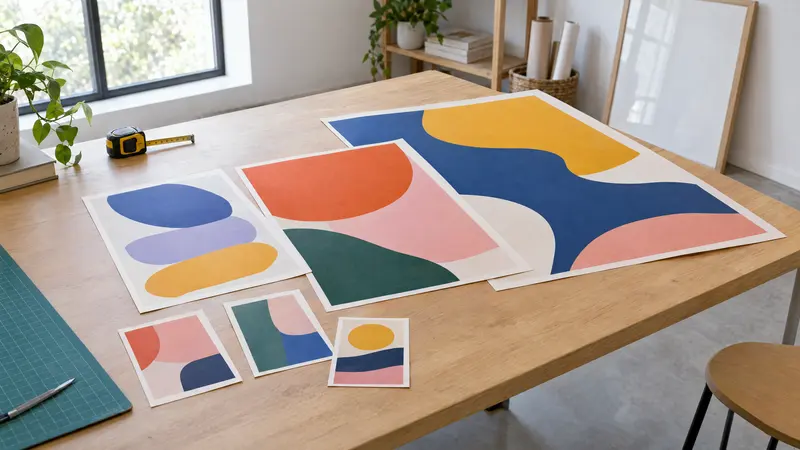
Indoor posters (shops, reception areas, noticeboards, clip frames) are usually printed on 135–200gsm coated paper – gloss for photos, or matt if the poster hangs opposite a window and would reflect the light. For outdoor posters pasted onto hoardings and boards, blueback paper at 115–135gsm is used; its blue reverse stops the old poster underneath from showing through. For longer outdoor display, synthetic or laminated materials are better, as ordinary paper quickly fades and soaks up water.
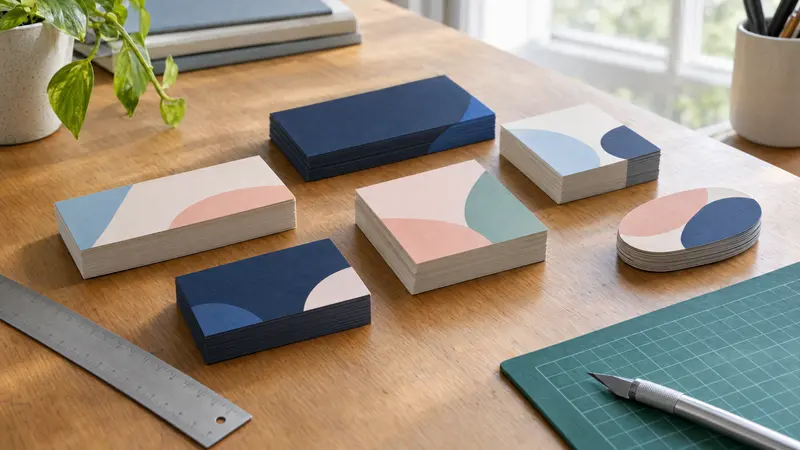
Business cards in the 85×55 mm format (the UK and Irish standard) or 90×50 mm are most often printed on 300–350gsm coated board, and the classic choice is matt lamination on both sides. On 300–350gsm uncoated or eco paper, a business card looks natural and you can jot a note on it. Business cards of 600gsm and heavier are usually several sheets laminated together, sometimes with a coloured core visible along the edge.
What to choose for each product – table
The summary below is a tried-and-tested starting point. The final choice depends on your budget, print run, distribution method and brand character, and different printers offer slightly different weights, e.g. 300gsm instead of 350gsm.
Whatever the paper, your print file should be at the trimmed size plus 3 mm bleed, with a safe margin for text. If you create your design in plakaty.shop (wielkareklama.eu studio), you'll get a print-ready PDF in exactly this layout, ready to send to the printer with your chosen paper.
| Product | Paper and weight | Finish |
|---|---|---|
| Mass-distribution flyer A6, DL, A5 | gloss or matt coated 130–170gsm | no finish |
| Premium flyer / card | matt coated 250–350gsm | matt or soft-touch lamination |
| Folded A4 leaflet | coated 115–170gsm | creasing from around 170gsm |
| Indoor poster A3–A1 | gloss or silk coated 135–200gsm | clip frame optional |
| Outdoor poster | blueback 115–135gsm or synthetic material | lamination for longer display |
| Business card | coated 300–350gsm or uncoated 300–350gsm | matt lamination, spot UV |
| Invitation, greetings card | 300–350gsm board, decorative paper | creasing, foil blocking |
| Menu, price list | matt coated 250–350gsm | matt or gloss lamination (easy to wipe clean) |
| Voucher, coupon | uncoated or matt coated 300–350gsm | no lamination if it needs to be written on |
| Swing tag, label | 350–400gsm board | drilled hole, matt lamination |
Checklist
- I've chosen a paper weight that suits the distribution method (mass distribution or handed out in person)
- I've decided between gloss, matt, silk coated or uncoated paper
- For a folded leaflet from around 170gsm, I've ordered creasing
- The file is at the trimmed size with 3 mm bleed and the text sits within the safe margin
- The design is in CMYK and, for uncoated paper, uses the appropriate colour profile
- Spot UV is prepared as a separate layer or file
- My outdoor poster is printed on blueback or a moisture-resistant material
- I've proofread all text, phone numbers, addresses and opening hours
- For a large print run, I've asked for a paper swatch book or a proof print
FAQs
What is the best paper weight for flyers?
The most popular choice is 130–170gsm coated paper. 130gsm is enough for mass distribution and letterbox drops, while 170gsm is stiffer and works better for flyers handed to customers. Premium card-style flyers are printed on 250–350gsm.
Is matt or gloss coated paper better?
Gloss coated paper gives more vivid colours and shows off photos better, but it reflects light. Matt coated paper is more elegant and easier to read with longer texts. If you can't decide, silk coated paper is a good compromise.
What paper weight should I use for business cards?
The standard is 300–350gsm, most often coated board with matt lamination on both sides. Thicker business cards of 600gsm and above are usually made by laminating several sheets together. If you want to write on your business cards, choose uncoated paper.
What paper are posters printed on?
Indoor posters are usually printed on 135–200gsm gloss or silk coated paper. Posters pasted up outdoors are printed on 115–135gsm blueback paper, which doesn't show through. For longer display in the rain, a synthetic or laminated material is better.
Can you write on a flyer printed on coated paper?
It's difficult with a biro, as the ink smudges and takes a long time to dry on the smooth coating. Pencils and some markers work better, but for coupons, vouchers and forms choose uncoated paper. Lamination makes ordinary writing impossible.
Does a 250gsm flyer need creasing before folding?
Yes – creasing is recommended from around 170gsm and is practically essential at 250gsm. Without it, the coating and ink crack along the fold, which is especially visible on dark backgrounds. You order creasing from the printer together with the print job.