Local business advertising for under €120: 10 ways
You can build cheap local business advertising for under €120 from a free map listing, A6 (105×148 mm) or DL (99×210 mm) flyers on 130–170 g/m² paper delivered through letterboxes, a few A3 posters around the area, and vouchers and partnerships with neighbouring businesses. Prepare your print files at 300 DPI, with 3 mm bleed and a 3–5 mm safe margin, and set flyer text at 8–9 pt or larger. The best results come from combining 3–4 channels, each with its own discount code, so you can see where your customers came from.
A small business doesn't need a campaign costing well over a thousand euros to get noticed locally. It needs a handful of well-chosen activities that reach people living and working within a few miles. Below you'll find 10 methods with approximate costs, exact print sizes and tips on checking which activity actually brings customers through the door. The amounts are general ranges, because the final price depends on quantity, paper, finishing and the printer.
How much does cheap local business advertising cost, and what can you fit into €120?
A budget of €120 is enough to get started if you combine free activities (a map listing, posts in local groups) with a few inexpensive print runs. Print is usually the biggest cost, but for short runs of flyers, posters and vouchers it stays within around a hundred euros.
The ranges below are approximate. The price of print depends mainly on the quantity, the paper weight, whether it's printed on one or both sides, and the turnaround time.
| Method | Approximate cost | Watch out for |
|---|---|---|
| Map listing | €0 | Up-to-date opening hours and phone number |
| Review request with a QR code | a few euros to around €10 | QR code at least 20×20 mm |
| Letterbox flyers | usually €25–70 | Respect "no junk mail" stickers |
| Posters around the area | around €10–20 | The owner's permission |
| Shop window and door | around €10–35 | Legibility from the street |
| Business cards | around €10–20 | Phone number and address free of typos |
| Partnerships with neighbours | cost of printing materials | Clear terms for the exchange |
| Vouchers | around €10–35 | Expiry date and numbering |
| Local groups and posts | €0 or a small boost budget | Group rules |
| Fence banner | usually €25–70 | The fence owner's permission |
10 ways to advertise a local business on a budget
You don't have to do everything at once. Start with a map listing and one print channel, then add more once you see the first results.
- Map listing — create or claim your Google Business Profile on Google Maps and fill in the category, opening hours, photos and phone number. This is where people search for things "near me".
- Review requests — print a small card or sticker for the till with a QR code linking to your review form. Ask happy customers for a review in person.
- Letterbox flyers — pick a few nearby streets and deliver A6 or DL flyers yourself or with help from family. Give one specific reason to visit: a discount, a free quote, something new.
- Local posters — put up A3 posters on noticeboards, in corner shops and in service businesses, always with the owner's permission. A big headline, one offer, a phone number.
- Shop window and door — a poster in the window or a sticker with your opening hours and offer of the day works every day at no extra cost. Check the text can be read from the other side of the pavement.
- Business cards — hand them out with every sale and leave them at friendly local businesses. You can add a discount for a second visit on the back.
- Partnerships with neighbouring businesses — swap flyers with a business that has similar customers but a different offer, such as a hairdresser and a beautician. Each hands out the other's materials at the till.
- Vouchers — create vouchers for a first service or as a prize in a local competition, school fair or church raffle. Number them so you know how many came back.
- Local groups and posts — post photos of your work and current offers in neighbourhood groups and on your own profile. If you like, boost one post across a small area for an amount you set yourself.
- Fence banner — a 200×100 cm or 300×100 cm banner by a busy road, on your own fence or with the owner's permission, works like a cheap billboard. Just the name, the service and a phone number will do.
Map listing: how to set it up so it brings in customers
A map listing is free and, for many local businesses, generates more phone calls than any flyer. What counts is complete details, up-to-date information and reviews. Give the same details (name, address, phone number) in exactly the same form everywhere: on your listing, website, flyers and shop sign.
As well as Google Maps, it's worth adding your business to Apple Maps and Bing Places, as some customers use other apps. All of these listings are free to set up.
- Choose an accurate primary category and add secondary categories.
- Enter your opening hours, including bank holiday changes.
- Add real photos: the entrance, the interior, examples of your work.
- Reply to every review, including negative ones, calmly and to the point.
- Post short updates with offers or news.
Letterbox flyers: format, paper and content
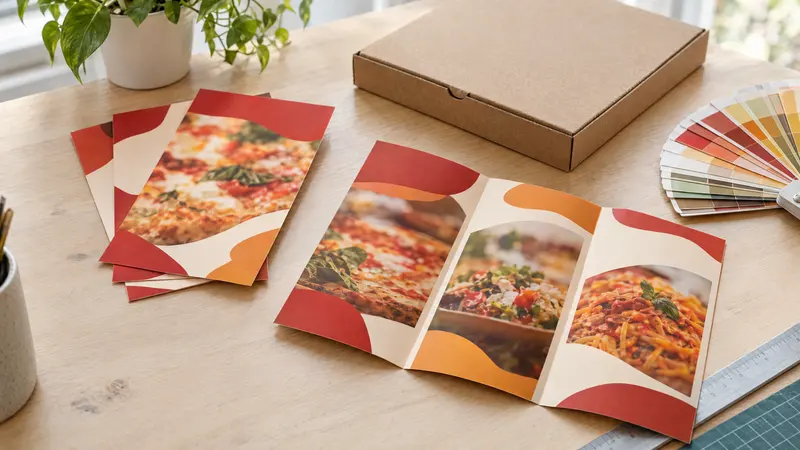
Small formats work best through letterboxes: A6 and DL fit any letterbox and are cheap to print. A5 gives more room, but bends more easily when being delivered. A flyer should have one main message, an offer with an expiry date and a phone number that's visible without hunting for it.
When delivering flyers, skip letterboxes with a "no junk mail" sticker and don't tuck them under car windscreen wipers. An annoyed resident is worse than no advertising at all.
- 3 mm bleed on every side, with important content at least 3–5 mm from the edge.
- Images at 300 DPI at 1:1 scale, colours in CMYK.
- Body text from 8–9 pt, with a noticeably larger headline.
- The reverse is a good place for a location map or price list.
| Format | Trimmed size | With 3 mm bleed | Recommended paper weight |
|---|---|---|---|
| A6 | 105×148 mm | 111×154 mm | 130–170 g/m², coated |
| DL | 99×210 mm | 105×216 mm | 130–170 g/m², coated |
| A5 | 148×210 mm | 154×216 mm | 130–170 g/m², or 250 g/m² for longer use |
Local posters: where to put them up and which format to choose
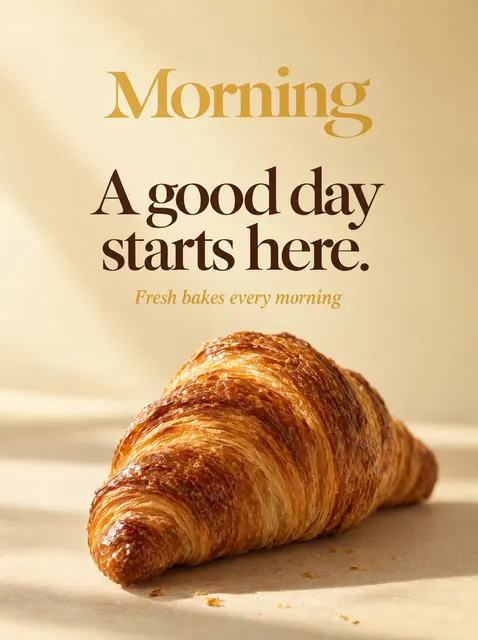
A3 (297×420 mm) usually suits noticeboards and shop doors, while A2 (420×594 mm) or A1 (594×841 mm) suits your own window. A rough legibility rule says each 1 cm of letter height gives about 3 m of reading distance. A headline that needs to be visible from the pavement should therefore be several centimetres tall.
Only put up posters with the permission of whoever manages the space. Putting up notices in public places without permission is an offence in the UK and Ireland (often known as fly-posting), and a torn-down poster plus a fine is a loss rather than advertising. Outdoors, choose moisture-resistant paper or put the poster in a plastic sleeve.
- Corner shops, bakeries, pharmacies — with the owner's permission.
- Noticeboards in blocks of flats and residents' association premises.
- Health centres, nurseries, community centres — if they accept notices.
- Your own shop window and front door.
Partnerships with neighbouring businesses and vouchers
Joint promotion with a neighbour costs only the printing, yet reaches customers who already trust the other business. The best pairings are businesses with the same customers but no competition: a florist and a cake shop, a garage and a car wash, a fitness studio and a health food shop. Agree in writing who hands out what and what discount you offer each other's customers.
Print vouchers in DL (99×210 mm), 210×100 mm or A6 on heavier paper, usually 250–350 g/m², so they feel like a gift rather than a flyer. Always state the value or scope of the service, the expiry date, the terms of redemption and a unique number.
- A "first visit" voucher handed out by a partner business.
- A voucher as a prize in a local competition or at a fair.
- A referral voucher: an existing customer gives it to a friend and both get a discount.
- A joint voucher from two businesses, such as a bundle of services at a lower price.
How to prepare your files and check which advertising works
Prepare every print item at trimmed size with 3 mm bleed, images at 300 DPI and colours in CMYK. For large formats such as a fence banner, printers usually accept a PDF at 1:10 scale. If you don't have your own designer, you can get ready-made flyer, poster or voucher designs with print-ready PDF files at plakaty.shop (wielkareklama.eu studio) in packages from €12, which leaves most of your budget for the printing itself.
To know what works, give each channel a different discount code or password, such as FLYER10 and POSTER10. Ask new customers how they heard about you, and after a month keep only the activities that brought people in.
Checklist
- Read every phone number, address and set of opening hours separately
- Check the 3 mm bleed and the 3–5 mm safe margin
- Make sure images are 300 DPI at 1:1 scale
- Scan the QR code with your phone before sending to print
- Add the offer's expiry date and the voucher terms
- Give each channel its own discount code
- Get permission to put up the poster or banner
- Compare the details with your map listing — they must match exactly
FAQs
What is the cheapest advertising for a local business?
The cheapest options are a map listing and regular posts in local groups, as they cost nothing but time. Of the print options, business cards and a few A3 posters cost the least. The best results come from combining a free listing with one inexpensive print item.
How many flyers should I print to start with?
For a first test, a few hundred delivered across a few nearby streets is usually enough. A larger run lowers the price per flyer, but it's better to check first that the offer works. If the flyer's discount code comes back, print more.
Which flyer format works best for letterboxes?
A6 (105×148 mm) or DL (99×210 mm) are the usual choices, as they fit any letterbox and are cheap. 130–170 g/m² paper is stiff enough while still being inexpensive. A5 works well when you have a lot of content, such as a price list.
Can I put a poster up on a lamp post or at a bus stop?
Only with the permission of whoever manages that space. Putting up notices in public places without permission (fly-posting) is an offence in the UK and Ireland and can lead to a fine. It's safer to use noticeboards, shops and service businesses whose owners have agreed.
What needs to go on a voucher?
A monetary value or description of the service, an expiry date, the terms of redemption, your business details and a unique number. Numbering helps prevent fakes and lets you count how many vouchers came back. DL or A6 on 250–350 g/m² paper looks good.
How can I check whether my advertising brings in customers?
Give each channel its own discount code or password and note which ones customers use. Also ask new customers directly how they heard about you. After a few weeks you'll see what's worth continuing to spend on.