Advertising for regional food producers: leaflets, posters and graphics — ideas and examples
For a beekeeper, smokehouse, cheesemaker or local food shop, the biggest returns come from the product label, an A5 or DL leaflet slipped into every order, an A3–A2 poster for markets and partner shops, and 1080×1080 px social media posts. Prepare print files at 300 DPI at 1:1 scale (roll-ups and banners at 1:10), with 3 mm bleed and all key content at least 3–5 mm from the trim edge. Print leaflets on 130–170 g/m² paper, keep leaflet text no smaller than 8 pt, and on food labels keep a lowercase x-height of at least 1.2 mm.
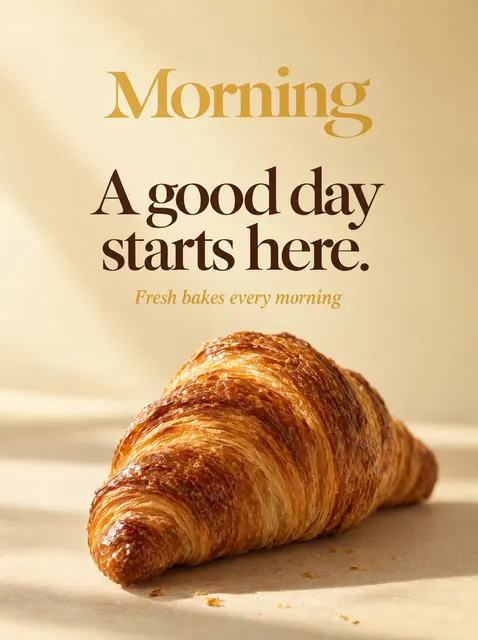
Example designs for this industry


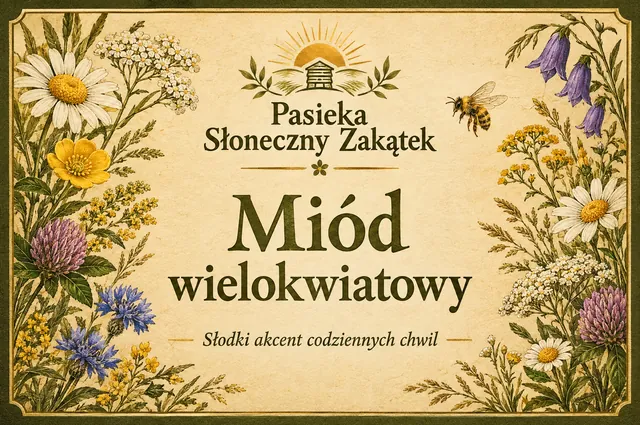
Honey, cured meats, cheese, preserves and wine sell on trust and on a story. Customers want to know who made it, where the ingredients come from and why it is worth paying more than at the supermarket. Your print and graphics need to tell that story in a few seconds: on the stall, on a partner shop's shelf and on a phone screen. Below you will find the materials that work best in this sector, ready-made ideas, sample slogans, colour choices, a calendar of key dates and the mistakes worth avoiding.
Which marketing materials matter most to regional food producers?
In this sector the most important advert is the product itself, so the label comes first, followed closely by the sleeve band and the swing tag. These decide whether a jar or a wedge of cheese gets picked up at a farmers' market or in a local food shop.
The second pillar is material that keeps working after the sale: a leaflet in the parcel, a business card by the till, a tasting voucher. The third is visibility at markets and around the farm: a roll-up banner, a fence banner, a roadside sign. Social media graphics tie everything together, because customers of regional producers often reorder by message or phone.
| Material | Typical format | Where it works best |
|---|---|---|
| Product label | any size: circle, oval, rectangle | jars, bottles, cheese and charcuterie packaging |
| Sleeve band / wrap | sized to the pack's circumference | gift sets, sliced meats, cheese portions |
| Swing tag | 50×90 or 60×120 mm | wine bottles, fruit liqueurs, gift hampers |
| Leaflet | A6, A5, DL | parcels, market stall, partner shops |
| Poster | A3, A2 | shop window, noticeboard, pub or inn |
| Roll-up banner | 85×200 or 100×200 cm | trade shows, fêtes, tastings |
| Fence banner | e.g. 300×100 cm | farm gate, roadside sales |
| Shop sign | e.g. 60–120 cm wide | shop entrance, apiary, smokehouse |
| Post / Stories | 1080×1080 / 1080×1920 px | market announcements, new batches, orders |
10 advertising ideas for beekeepers, smokehouses, cheesemakers and vineyards
Every one of these ideas can be done without a big budget. Pick two or three to start with and stick to one visual style across all your materials.
- "Our farm story" leaflet in the parcel — on an A5 sheet, explain in a few sentences who makes the product, where the ingredients come from and how to store it, with an order number and a QR code to your shop on the back.
- Cheese or honey tasting card — in DL format, describe the flavour, pairings and best uses for each product, so customers take it from the stall as a handy crib sheet.
- Swing tag with a recipe — print a simple recipe using the product on a 60×120 mm tag, such as a honey marinade or a cheese board, to add value to a gift.
- "Fresh batch" poster for partner shops — an A3 poster with a large product photo and a blank panel for the date or variety, which the retailer fills in with a marker.
- Tour or workshop voucher — a DL voucher for a visit to your apiary, smokehouse or vineyard, sold as a gift in the run-up to Christmas.
- Roadside banner — a 300×100 cm banner with three words and an arrow, e.g. "Fresh local honey — 200 m", readable by a driver in 2–3 seconds.
- Trade-show roll-up with a map — show an outline of your region on the roll-up and mark where your product comes from, instantly linking it to a place.
- Loyalty card — an 85×55 mm business card with stamp boxes, e.g. every sixth jar free, handed out with the first purchase.
- Gift-set sleeve band — a single branded band holds jars or cheese portions together as a gift set, and you simply change what goes inside.
- "How it's made" post series — 4–6 graphics at 1080×1080 px showing production stages, such as extracting honey, smoking or maturing cheese, published before the market season.
What to write on a leaflet or poster: sample slogans
A good regional producer's leaflet has four elements: a short headline, one sentence about provenance, a specific offer or product list, and how to order. On a poster, keep only the headline, a photo, your name and one contact, because posters are read from several metres away.
Avoid vague claims like "highest quality". Instead give a detail that can be checked: the name of the village, the wood used for smoking, the grape variety, milk from your own herd. Only use "organic", "bio" and protected regional food names if you hold the relevant certification or registration.
- Beekeeper: "Honey from our meadow, not a warehouse", "Extracted this season, a few miles from here".
- Smokehouse: "Slow-smoked over alder and beech", "Ham the way Grandad used to make it".
- Cheesemaker: "Cheese made with milk from our own cows", "It matures until it's ready — not a day sooner".
- Preserves: "Fruit from our orchard, sugar in moderation", "Summer in a jar".
- Vineyard: "Visit the vineyard where it's made" (for wine advertising, check the legal restrictions covered in the mistakes section).
- Local food shop: "We know every producer by name", "Shopping from your neighbours across the region".
- Call to action: "Order by phone, collect on Saturday at the market", "Scan the code to see when we're next in your town".
Which colours and styles suit regional produce?
Earthy tones and the colours of the product itself work best: the gold and amber of honey, the deep browns of a smokehouse, the creamy tones of cheese, the reds of fruit, the burgundy of wine. Pair them with one neutral base, such as off-white or kraft, and one accent colour for the headline or price.
The style usually combines hand-drawn illustrations, a serif or stencil typeface for headings and a simple sans serif for body text. The paper is part of the message too: uncoated or kraft stock emphasises craftsmanship, but colours print darker and less saturated on it than on coated paper, so product photos are better printed on matt coated stock.
| Sector | Base colours | Accent and style |
|---|---|---|
| Beekeeper | honey gold, amber, cream | black or meadow green, honeycomb motif, bee illustrations |
| Smokehouse | dark brown, graphite, kraft | brick red, wood texture, rustic style |
| Cheesemaker | cream, ivory, beige | pasture green, cow or goat illustrations |
| Preserves | white, linen | raspberry red, plum purple, gingham, hand lettering |
| Vineyard | burgundy, bottle green | gold or copper, elegant serif typography |
| Local food shop | greens, kraft | one warm accent, vegetable and produce icons |
Calendar of key dates for regional food producers
Order your materials well in advance: social media graphics 1–2 weeks before the occasion, print 3–4 weeks before, and Christmas labels and packaging even earlier, because corporate clients plan their gift hampers a long way ahead.
| Period | Occasion | What to prepare |
|---|---|---|
| January–February | Valentine's Day, winter markets | gifts for two, sleeve bands, posts |
| March–April | International Women's Day, Mother's Day, Easter | seasonal labels, Easter hamper leaflets, posters for shops |
| May–June | Father's Day, start of the market season | vouchers, roll-up, market calendar on Stories |
| July–August | fairs, fêtes, tourist season | roadside banner, tasting cards, leaflets for holiday lets and farm stays |
| August–September | honey harvest, harvest festivals | "new season honey" poster, new harvest labels |
| September–October | grape harvest, autumn preserves | open day invitations, "how it's made" posts |
| November–December | Christmas, corporate gifts | gift hamper catalogue, greetings cards, swing tags, vouchers |
How to prepare print files for labels, leaflets and banners
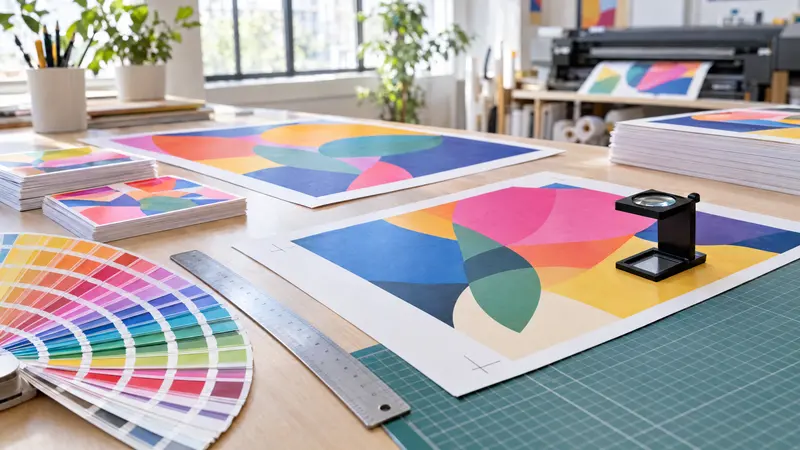
Set up leaflets, posters, labels and business cards at 1:1 scale, at 300 DPI, with 3 mm bleed on every side and a 3–5 mm safe margin. Roll-ups and banners are usually prepared at 1:10 scale, in which case the artwork needs a proportionally higher resolution, and the details depend on your printer's specifications. Set colours in CMYK, because screens show colours brighter than they print.
A food label must carry the mandatory information: the product name, ingredients with allergens emphasised, net quantity, best-before or use-by date, storage conditions, the producer's details and, for honey, the country of origin. The exact requirements depend on the type of product and how it is sold, so if in doubt, check with your local authority's environmental health or trading standards team (in Ireland, the Food Safety Authority of Ireland). If you would like to try out a few design directions quickly, plakaty.shop (wielkareklama.eu studio) offers label or leaflet concepts from €12, delivered as print-ready PDF files with 3 mm bleed.
Common mistakes in regional food advertising
Most problems are not caused by weak design but by a lack of specifics, or by regulations the producer was unaware of. Run through this list before you order a print run.
- Too much text on the poster — nobody reads a list of twenty products from several metres away; pick one hero product.
- Phone photos in poor light — dark honey or cured meat on a yellow background looks unappetising; shoot by a window against a plain background.
- Every item in a different style — the label, leaflet and roll-up should share the same typeface, colours and logo so customers recognise you.
- Unauthorised claims — "bio", "organic" and protected regional names require certification or registration.
- Advertising wine like cheese — alcohol advertising is tightly regulated (in the UK by the advertising codes, in Ireland by the Public Health (Alcohol) Act 2018), and what is permitted depends on the location and format, so check the rules before printing a poster featuring a bottle.
- No information on how to buy — a leaflet without a phone number, collection address or QR code to your shop won't turn interest into orders.
- Text too small on the label — an ingredients list in tiny type is hard to read and may not meet legal requirements.
Checklist
- Proofread all text, names, phone numbers and addresses, ideally aloud or with a second person
- Check the 3 mm bleed and the 3–5 mm safe margin
- Make sure photos are 300 DPI at print size
- Verify the mandatory label information and allergen emphasis
- Remove "bio", "organic" or protected names if you are not certified
- Scan the QR code with your phone and check it goes to the right place
- Compare colours and logo with previous materials to keep a consistent style
- For wine or liqueur advertising, check that the format complies with the regulations
FAQs
How can I advertise a small apiary or smokehouse on a tight budget?
Start with a good label, an A5 or DL leaflet included with every order, and a banner by the road or on the farm gate. Add regular posts showing how your products are made and where you'll be at markets. The cost is modest, and the materials work for you with every sale.
What paper should I choose for a regional produce leaflet?
130–170 g/m² paper is the most common choice. Matt coated stock reproduces product photos well, while uncoated or kraft paper emphasises the artisan character but darkens colours. The choice depends on whether the leaflet relies on photos or on illustration and text.
What must go on a label for honey, cheese or preserves?
The essentials are the product name, ingredients with allergens emphasised, net quantity, best-before or use-by date, storage conditions and the producer's details, plus the country of origin for honey. The details depend on the type of product and how it is sold, e.g. direct sales. If in doubt, ask your local authority's environmental health or trading standards team, or the Food Safety Authority of Ireland.
Can a vineyard print advertising posters featuring wine?
Alcohol advertising is strictly regulated: in the UK it must comply with the advertising codes, and in Ireland the Public Health (Alcohol) Act 2018 restricts it considerably. What is permitted depends on where the advert is displayed and its format, so it is worth checking the current rules before printing. It is safer to promote the vineyard itself, tours and events, and to place information about your wines where the law allows it.
Which colours suit regional food advertising?
Natural colours work best: honey gold, browns, creamy tones, fruit reds and burgundy, on an off-white or kraft background. Add one accent colour for the headline or price. What matters is that the same colours appear on the label, leaflet and roll-up.
What format should a trade-show roll-up be?
The most popular roll-ups are 85×200 cm or 100×200 cm. The file is usually prepared as a PDF at 1:10 scale, with bleed as specified by the printer. Place the most important content in the upper part, because the table and products will hide the bottom.