Advertising for IT Firms, Accountants and Law Firms: Flyers, Posters and Graphics – Ideas and Examples
An IT firm, accountancy practice or law firm gets the most from three things: an 85×55 mm business card (90×50 mm in some markets) on board of around 350 g/m², a DL or A5 flyer (130–170 g/m² coated paper) focused on one specific service, and consistent graphics for LinkedIn and social media at 1080×1080 px. For trade shows and conferences, add an 85×200 cm roll-up banner, and for the office entrance a sign showing your name and opening hours. Prepare print files in CMYK at 300 DPI for small formats, with 3 mm bleed, text at least 3–5 mm inside the trim line, and type no smaller than 7 pt on business cards and 8–9 pt on flyers.
Example designs for this industry




In B2B services, nobody buys on impulse. Before a client rings an accountancy practice, software house or law firm, they need to trust you. Print and design won't replace a proper conversation, but they make sure that after a meeting, a trade show or a walk past your office, you leave behind a clear, professional impression. Below you'll find the materials that genuinely work in this sector, 10 ideas you can put into practice, ready-made slogans, colour choices, a calendar of key dates and the mistakes worth avoiding.
Which marketing materials matter most for an IT firm, accountancy practice or law firm?
In professional services, credibility and easy contact count for far more than the volume of print. The foundation is the business card, because B2B relationships are still built at meetings, conferences and business incubators. The second pillar is a short flyer or brochure covering a single service, which the client can take away and show to a partner or the board.
Online graphics matter just as much as print here, because B2B clients almost always look you up online after a meeting. That's why your business card, flyer, roll-up and social posts should look like one family: the same colours, typeface and icon style.
| Material | Format and paper | Where it works | What to watch out for |
|---|---|---|---|
| Business card | 85×55 or 90×50 mm, board approx. 350 g/m² | meetings, trade shows, networking | add a QR code linking to a digital business card or booking calendar |
| Flyer / sales brochure | DL or A5, 130–170 g/m² coated paper | proposal folders, reception, enclosed with documents | one service or package, concrete benefits |
| Poster | A3–A1 | coworking spaces, incubators, universities, office window | one headline, a QR code, minimal text |
| Roll-up banner | 85×200 or 100×200 cm | trade shows, conferences, meetups, training sessions | key content in the top half |
| Sign / plaque | e.g. 60–120 cm wide | office entrance, stairwell | name, services, opening hours, floor |
| Online graphics | 1080×1080 px, 1080×1920 px, 2400×1200 px | LinkedIn, Facebook, Instagram, website | same style as your printed materials |
10 advertising ideas for IT firms and B2B services
Each of these ideas can be put into practice without a big budget. Pick two or three that suit the way you win clients, rather than trying to do everything at once.
- Business card with a QR code – put a code on the back linking to a digital business card (vCard) or a calendar for booking consultations. The client saves your details with a single scan instead of typing in your number.
- ‘One service – one page’ flyer – create separate DL flyers for your key services, e.g. payroll and HR, security audits or contracts for e-commerce. You then put only the relevant ones in each client's folder.
- Key dates cheat sheet for clients – an accountancy practice can print an A4 or A5 sheet listing the most important filing and payment deadlines of the year. The client pins it up by their desk and sees your logo every day.
- Roll-up banner for trade shows and meetups – one sentence about what you do, 3 service icons and a QR code at eye level. An 85×200 cm roll-up fits in a car boot and one person can put it up.
- Poster in a coworking space or incubator – an A3 or A2 poster with a headline aimed at young businesses, e.g. about their first bookkeeping or first website. Agree the spot with the building manager and add a QR code for booking a consultation.
- First consultation voucher – a DL or A6 voucher for a free 30-minute call. It works well in welcome packs for new businesses and as a giveaway at events.
- Helpdesk sticker on client equipment – an IT firm can put a small sticker with its support number on clients' computers and printers. When something stops working, nobody has to hunt for the support contact.
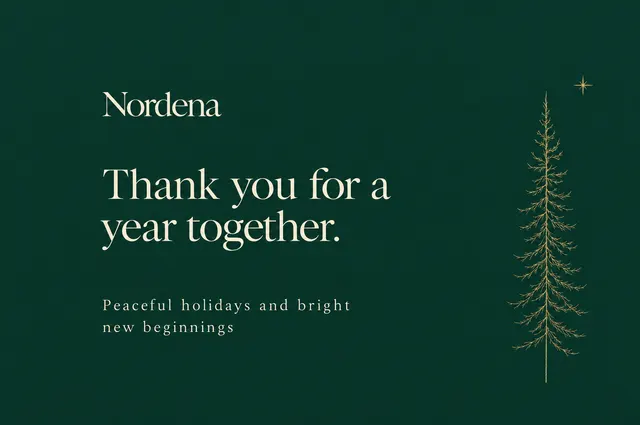
- Christmas card for clients – in B2B relationships, a printed A6 or DL card with a handwritten signature stands out from a sea of emails. The reverse can carry a short thank-you for the year's work together.
- ‘Client question’ post series – each week, one 1080×1080 px graphic with a question you often hear and a short answer. It builds expertise on LinkedIn far better than generic promotional posts.
- Certificate for training participants – if you run webinars or workshops, hand out an A4 certificate bearing your logo. Participants are happy to share it online, which gives you free reach.
What to put on a flyer or poster: sample slogans and copy
A good B2B flyer has a simple structure: a benefit-led headline, three concrete points, proof of credibility, a call to action and contact details. Write in your client's language rather than a specialist's, and state only facts you can back up, such as a real response time or the scope of your service.
Solicitors, barristers and tax advisers are bound by professional conduct rules that restrict how they can advertise. Check the current rules of your regulator or professional body; the safest approach is an informative one: who you are, what you do and how to get in touch.
- Accountancy practice: ‘You run your business, we keep track of the deadlines.’ / ‘Accounts, payroll and HR in one place.’
- Law firm (informative style): ‘Commercial law for small and medium-sized businesses. Contracts, company law, debt recovery.’
- IT firm: ‘Your computers work. We make sure they stay that way.’ / ‘IT support for offices of up to 50 workstations.’
- Agency: ‘A website that brings in enquiries, not one that just looks good.’
- Start-up: ‘Send invoices in a minute, not an hour.’ – a concrete product benefit rather than a vague ‘innovative solution’.
- Calls to action: ‘Scan the code to book a free consultation’, ‘Call us – we'll quote within 24 hours’ (only if it's true), ‘Download the checklist for new businesses’.
Which colours and style suit business and technology?
In this sector, colour should inspire trust rather than grab attention at any cost. Navy, graphite and white make a safe base, while a single accent colour sets you apart from competitors. Bear in mind that bright, saturated on-screen colours (RGB) often print darker or greyer in CMYK, so define your brand colours in both versions from the outset.
For body text, use a legible sans-serif typeface; a law firm might opt for a serif typeface in its name for a classic feel. Leave plenty of white space, and instead of stock photos of handshakes, choose line icons, photos of your team or product screenshots.
| Type of business | Colours | Style |
|---|---|---|
| Accountancy practice | navy, bottle green, grey, white | orderly, calm, lots of white space |
| Law firm | navy, graphite, burgundy, beige or gold accent | classic, serif name, restrained layout |
| IT firm / software house | navy or black with a turquoise, purple or lime accent | modern, geometric, line icons |
| Agency | brand colours, strong contrast | creative, but with a clear hierarchy |
| Start-up | app colours, 1–2 accents | as simple as an interface, product screenshots |
Calendar of key dates for B2B businesses
Professional services have their own rhythm: tax returns, budgets, conference season. Prepare your materials a few weeks in advance, because at peak times both you and the printer are at your busiest.
| Period | Occasion | What to prepare |
|---|---|---|
| January | new year, new company formations, regulatory changes | ‘What's changing’ flyer, explainer posts |
| February–April | annual personal tax returns (check the deadlines in your country) | tax return poster and flyer, stories reminding clients of deadlines |
| May–June | trade shows, conferences, intern recruitment | roll-up banner, recruitment poster for universities |
| July–August | quieter period | refresh business cards, signage and materials for the autumn |
| September–October | back after the summer, conference season, Programmers' Day | invitations to webinars and business breakfasts, social posts |
| November | budget planning for the coming year, Black Friday in SaaS | voucher, package offer for the new year |
| December | thanking clients | Christmas card, year-in-review post |
Common advertising mistakes made by IT firms and B2B services
Most ineffective materials in this sector aren't ugly, just unclear. After three seconds, the client still doesn't know exactly what you do and who for.
- Jargon instead of benefits – ‘we implement cloud solutions’ says less than ‘your files available from any computer, backed up every night’.
- The entire offer on one flyer – twelve services in small print sell none of them.
- Stock photos of suits and handshakes – they look exactly the same as your competitors'.
- No call to action, or a QR code leading to the home page instead of a specific landing page.
- Light grey text on a white background and type below 7 pt – unreadable for many people.
- RGB colours in the print file and no 3 mm bleed – shifted colours and white slivers along the edges.
- Promises you can't keep, or claims that breach professional conduct rules.
- A typo in the phone number or email address – the costliest mistake of all, because it renders the whole print run useless.
How to prepare your design and print files
Prepare small formats (business cards, flyers, posters up to A2) at 1:1 scale, in CMYK, with images at 300 DPI, 3 mm bleed and a 3–5 mm safety margin inside the trim line. Use a vector version of your logo, and embed fonts in the PDF or convert them to outlines. Large-format printers often accept roll-ups and banners at 1:10 scale; exact resolution requirements depend on the printer and the distance from which the print will be viewed.
If you don't have a designer, at plakaty.shop (wielkareklama.eu studio) you fill in a short form with your company name, copy, style and colours, and within a few minutes you receive design proposals as PNG and PDF files with 3 mm bleed, from €12 per proposal. Whoever prepares the design, always read every word, phone number and address yourself before it goes to print.
Checklist
- Name, phone number, email and website checked character by character
- QR code tested on two phones and leading to a specific landing page
- One main benefit and one call to action
- 3 mm bleed and text at least 3–5 mm inside the trim line
- File in CMYK, images at 300 DPI for small formats
- Type at least 7 pt on business cards and 8–9 pt on flyers
- Vector logo, colours consistent with your online graphics
- Copy compliant with professional conduct rules (law firms, tax advisers)
- Social media graphics at 1080×1080 and 1080×1920 px
FAQs
How do I advertise an accountancy practice locally?
Focus on a visible sign at the entrance, business cards handed out at every opportunity and DL flyers left wherever business owners gather, such as coworking spaces and incubators. A key dates cheat sheet for clients also works well, as does a poster during tax return season. Link all your materials to a contact form with a QR code.
Does an IT firm need flyers if it operates online?
Yes, but as sales support rather than mass distribution. A single-service flyer stays with the client after the meeting and reaches people who weren't part of the conversation. At trade shows and meetups, print, a roll-up banner and a business card with a QR code are often the first contact someone has with your brand.
Which flyer format should a B2B service business choose?
DL (99×210 mm) fits a standard envelope and proposal folder, so it works well for meetings and mailings. A5 gives you more room to describe packages and how you work with clients. A6 is enough for a voucher or an invitation to a consultation.
Can a law firm advertise?
Solicitors and barristers are bound by professional conduct rules that restrict how they can advertise, so check the current rules of your regulator or professional body before printing anything. An informative approach is safe: the firm's name, specialism, contact details and opening hours. Avoid promising case outcomes or comparing yourself with other firms.
What paper weight and finish should I choose for business cards?
The standard is board of around 350 g/m², which is rigid and won't bend in a wallet. Matt or soft-touch lamination adds elegance and suits law firms and accountancy practices. If you want to be able to write on the card with a pen, choose uncoated stock or leave one side unlaminated.
How much does a flyer or business card design cost?
It depends on whether you commission a freelance designer, an agency or use an online tool. At plakaty.shop, packages start at €12 for one design proposal, €24 for three and €35 for six, while a design prepared by a designer costs €165. The reverse side of a flyer or business card is charged extra.