Wedding Industry Advertising: Flyers, Posters and Graphics — Ideas and Examples
The most effective way to advertise a wedding business is with a set of materials: an 85×55 mm business card (or 90×50 mm) on 350 g/m² board, a DL (99×210 mm) or A5 flyer on 250–350 g/m² matt coated paper, and an 85×200 cm pull-up banner for wedding fairs. Add 1080×1080 px posts and 1080×1920 px stories to complete it. Prepare print files at 300 DPI, with 3 mm bleed and a 3–5 mm safety margin, and set body text on a flyer at no less than 8–9 pt.
Example designs for this industry


Couples choose their venue, photographer or florist with their eyes. Before they pick up the phone, they browse photos, handle flyers at wedding fairs and compare quotes around the kitchen table. That is why, in the wedding industry, your print needs to look as good as your work. Below you will find the materials that genuinely deliver in this sector, 10 practical ideas, ready-made slogans, colour choices, a seasonal calendar and the mistakes worth avoiding.
Which advertising materials matter most in the wedding industry?
Wedding clients plan well ahead and compare several suppliers, so what counts is material they can take home. Flyers and business cards end up in goody bags at wedding fairs, a pull-up banner catches the eye from across the hall, and social media graphics lead people to your portfolio. A wedding venue will gain most from a banner and a package price list, a photographer from a portfolio flyer, a florist from business cards and stickers, and an event planner from a flyer setting out the services on offer.
Paper quality is part of the message here. 300–350 g/m² matt coated stock, soft-touch lamination or hot-foil gold stamping say ‘we care about the details’ before the client has read a single word.
| Material | Typical format | Where it works | Why it matters |
|---|---|---|---|
| Business card | 85×55 mm or 90×50 mm, 350 g/m² | Meetings, fairs, partner suppliers | The cheapest item, and one couples keep |
| Flyer | DL 99×210 mm, A5 148×210 mm | Fairs, bridal shops, post | Room for photos, your offer and a QR code |
| Poster | A3 297×420 mm, A2 420×594 mm | Partner shops, venue reception | Permanent display at partner businesses |
| Pull-up banner | 85×200 cm or 100×200 cm | Wedding fairs, open days | Visible above the crowd |
| Banner | e.g. 300×100 cm | Venue fence, roadside | Announces available dates |
| Social media graphics | 1080×1080 px, 1080×1920 px | Instagram, Facebook | Where couples look for inspiration |
10 ideas for advertising a wedding business
Each of these ideas can be put into practice by a small business without a large budget. Choose 3–4 that suit your service and keep one consistent visual style across all your materials.
- Portfolio flyer: on an A5 or DL flyer, show 3–4 of your best photos, a short description of your offer and a QR code linking to the full gallery.
- Wedding fair pull-up banner: place a large photo, your business name and a single slogan in the top section, as the bottom 50–60 cm will be hidden by people and the table.
- Premium business card: choose 350 g/m² board with soft-touch lamination or a gold-foiled logo, and add a QR code to your portfolio or Instagram on the reverse.
- Wedding fair voucher: hand out a DL voucher offering a discount or a free extra when booking by a set date, such as a complimentary engagement shoot or buttonholes for the groomsmen.
- Posters at partner businesses: swap A3 posters with a bridal shop, jeweller or cake maker — your offer hangs where couples have already decided to marry.
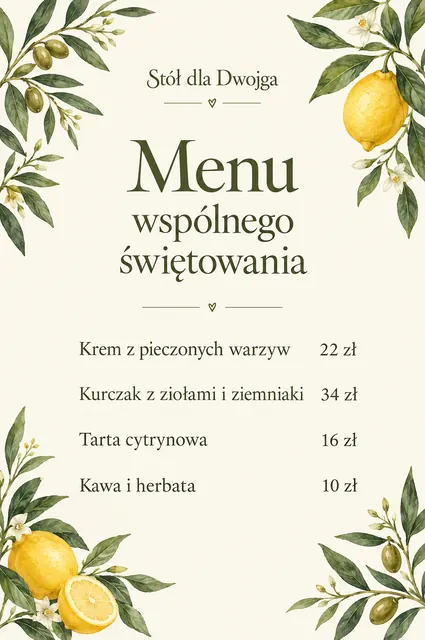
- Wedding package price list: a venue or caterer can produce an A4 menu or a 210 mm square card with 2–3 packages, which makes comparison easier and shortens the conversation.
- ‘Dates available’ banner: hang a 300×100 cm banner on the venue fence with a slogan and a phone number legible from a passing car.
- Thank-you card: after the wedding, give the couple an A6 thank-you card with a QR code for leaving a Google review.
- Logo stickers: florists and cake makers can brand boxes, ribbons and packaging with a round sticker, and photographers the USB stick case holding the photos.
- Series of posts and stories: publish a ‘wedding of the week’, behind-the-scenes preparations and couples’ reviews using one template at 1080×1080 px and 1080×1920 px.
What to write on a flyer or poster? Example slogans
A good wedding flyer has a simple layout: a headline with a benefit, a photo, 3–5 points about your offer, a short review from a couple, a call to action and contact details. Address the couple together — ‘you’ and ‘your’ as a pair — because it is their joint decision. If you include prices, write ‘from’ and update them before every reprint.
A poster slogan should be no more than 6–8 words so it can be read in passing. Move the details to the flyer or to a web page behind a QR code.
- Wedding venue: ‘Your day, our venue — everything in one place’, ‘Check our available dates for next season’.
- Wedding photographer: ‘Moments you’ll keep for ever’, ‘Documentary coverage from getting ready to the last dance’.
- Florist: ‘Flowers that tell your story’, ‘Bouquets, church and venue styling from one florist’.
- Event planner: ‘You celebrate, we take care of the details’, ‘A stress-free wedding — from first plan to final toast’.
- Calls to action: ‘Book a free consultation’, ‘Scan the code to see the full gallery’, ‘Call us to reserve your date’.
- Proof of trust: a short review from a couple with their first names (with their consent) or the number of weddings you have worked on, if you can document it.
Which colours and style suit wedding advertising?
Choose colours to suit the clients you want to attract, not your own taste. A rustic barn needs a different look from an elegant country house. Photos of your work should dominate, with your brand colours simply framing them.
Remember that gold, silver and copper printed in CMYK come out as flat beige or grey. A true metallic effect is only possible with hot-foil stamping or a metallic Pantone ink, depending on the printer’s capabilities and the print run.
| Style | Colours | Fonts | Best for |
|---|---|---|---|
| Classic elegance | white, cream, gold, navy | serif + sparing calligraphic script | Country houses, hotels, premium photographers |
| Boho and rustic | sage, terracotta, beige, eucalyptus | simple sans serif, handwritten accents | Barns, outdoor weddings, florists |
| Modern minimalism | white, black, graphite, one accent colour | geometric sans serif | Planners, videographers, photo booths |
| Romantic pastels | dusty pink, lavender, pearl | serif, delicate ornaments | Cake makers, decorators, bridal shops |
Seasonal calendar for the wedding industry
Wedding bookings are usually made anywhere from a few months to more than a year in advance, so plan your advertising outside the peak season. Check exact wedding fair dates with local organisers, as they vary from town to town.
| Period | Occasion | What to prepare |
|---|---|---|
| January–March | Wedding fairs, planning after Christmas engagements | Pull-up banner, flyers, fair vouchers |
| February | Valentine’s Day (14 February), engagements | Posts and stories, engagement shoot offer |
| April–May | First Communions and christenings | Flyers and a price list for family celebrations |
| May–September | Peak wedding season | Thank-you cards, content from your weddings for social media |
| September–November | Autumn fairs, bookings for the following year | ‘Dates available’ banner, updated portfolio |
| November–December | Office Christmas parties, New Year’s Eve, gifts | Gift vouchers, corporate events offer |
How to prepare files for print
Prepare flyers, business cards and posters in CMYK, at 300 DPI at 1:1 scale, with 3 mm bleed on every side and important elements at least 3–5 mm inside the trim line. Large-format printers usually accept pull-up banners and banners as a PDF at 1:10 scale, in which case the artwork needs a correspondingly higher resolution. Check wedding photos on a test print, as skin tones and the white of a wedding dress can easily shift towards yellow or grey.
If you don’t have a designer, you can order a flyer or pull-up banner design from plakaty.shop (wielkareklama.eu studio): fill in a short form and within a few minutes you will receive proposals as a PDF with 3 mm bleed, in a package from €12 per proposal. Wherever your design comes from, always proofread all the text, phone numbers and addresses yourself.
Common mistakes in wedding business advertising
Most mistakes happen because the material is meant to look ‘pretty’, while legibility and specifics are forgotten. A couple must understand within seconds what you offer and how to get in touch.
- Calligraphic font throughout: keep it for the headline and set the description and contact details in a plain typeface.
- Too little contrast: pale gold or dusty pink text on a white background disappears under exhibition hall lighting.
- Stock photos instead of your own work: couples spot them quickly and lose trust.
- Low-resolution images taken from the internet, which come out blurred in print.
- No call to action and no QR code linking to your gallery.
- Publishing images of couples without their written consent.
- Out-of-date prices or a slogan with a specific year on materials printed to last several seasons.
- Important elements of a pull-up banner placed right at the bottom, where the table hides them.
Checklist
- I have proofread all text, phone numbers, addresses and profile names
- The file has 3 mm bleed and a 3–5 mm safety margin
- Images are 300 DPI at 1:1 scale and in CMYK
- Body text is at least 8–9 pt, with decorative fonts used only in headings
- The QR code has been scanned with a phone and leads to the correct page
- I have couples’ consent to publish their photos
- Prices and the offer are up to date, with no date that will quickly become stale
- Colours have been checked on a test print, especially the white of the dress and skin tones
FAQs
Which flyer format should a wedding business choose?
DL (99×210 mm) works best in most cases, as it fits in an envelope and a fair goody bag, while A5 (148×210 mm) suits you if you want to show more photos. Photographers and venues often choose a double-sided A5 or a folded A4, because a portfolio needs space. For short fair offers, A6 is enough.
Which paper should I choose for a wedding flyer?
Matt coated paper at 250–350 g/m² suits the wedding industry well, as it doesn’t reflect light and reproduces photos nicely. For a premium finish, add soft-touch lamination or spot UV varnish. Thin 130 g/m² gloss paper works for large print runs but looks less elegant.
Which pull-up banner should I choose for a wedding fair?
The standard is an 85×200 cm pull-up banner, or 100×200 cm for a larger stand. Place your logo and slogan in the top section, as visitors will block the bottom. One large photo of your work is more effective than a collage of many small ones.
Can gold be printed on a flyer?
In standard CMYK printing, gold comes out as beige or a mustardy brown with no shine. A genuine metallic effect comes from hot-foil stamping or a metallic Pantone ink. Whether it is cost-effective depends on the print run and the printer’s capabilities, so ask about it before you start designing.
Can I use photos from clients’ weddings in my advertising?
Yes, but you need consent from the people shown in the photos to use their images, ideally in writing, for example in your contract. This also applies to guests if they are recognisable and the main subject of the shot. Without consent, choose detail shots: rings, the bouquet, decorations.
What should I write on a wedding venue flyer?
Start with a benefit-led slogan, such as ‘Your day, our venue’, then give the venue’s capacity, what the package includes and whether you offer accommodation or grounds for photos. Add a photo of the interior, a short review from a couple and a call to action such as ‘Check our available dates’. Finish with your phone number, address and a QR code to your gallery.